
Choosing the right Aluminium Frame in 2026 will require more than comparing prices or surface finishes. Global buyers are facing varied climates, building standards, transport conditions, and installation practices. A frame that performs well beside a dry Mediterranean coast may need different protection in a humid tropical city. Cold regions create another challenge, especially where thermal bridging affects indoor comfort.
The best choice often depends on the frame’s purpose. Thermal-break aluminium systems can improve insulation around large windows and façades. Powder-coated profiles offer useful colour stability and surface protection. Anodised finishes may suit projects requiring a durable metallic appearance. Slim profiles can increase daylight, but they may demand stronger engineering and more precise installation. Small details matter.
Tom Dobbins, President and CEO of The Aluminum Association, has stated, “Aluminum is infinitely recyclable.” That point remains important for buyers assessing long-term value, not merely initial cost. Recycled content, alloy quality, coating performance, and documented testing should all be examined together. Supplier claims deserve verification.
There is no universal winner. Not really.
This guide compares practical Aluminium Frame types for residential, commercial, industrial, and architectural projects in 2026. It considers strength, weight, corrosion resistance, thermal performance, maintenance, customization, and supply reliability. Some recommendations may appear less attractive after freight, machining, hardware, and installation costs are included. That is the uncomfortable part. A cheaper frame can become expensive when tolerances are poor or replacement components are difficult to source. Good purchasing decisions require technical evidence, local conditions, and a willingness to question familiar specifications.
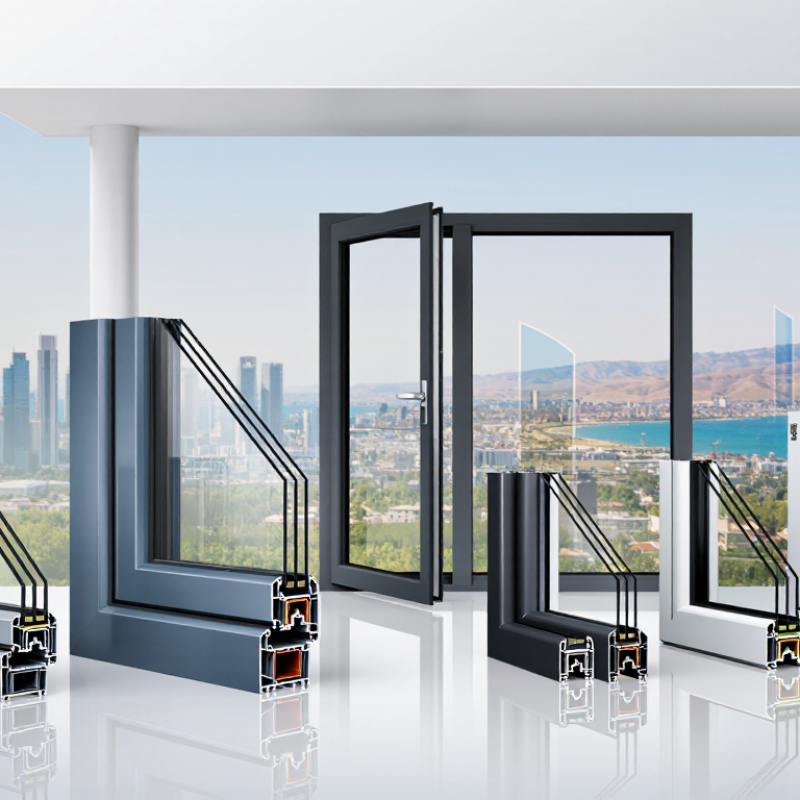
For global buyers, aluminium frame selection starts with the alloy, temper, and applicable standard. A simple grade table can mislead. Alloy 6061-T6 offers higher yield strength and better structural performance. It suits load-bearing frames, machine guards, and demanding outdoor assemblies. However, it usually requires more careful extrusion and surface finishing.
Alloy 6063-T5 is easier to extrude and produces cleaner, more attractive profiles. It works well for windows, display structures, partitions, and lightweight equipment frames. Its strength is lower than 6061-T6, especially in thin sections. The “T5” temper means the profile was cooled after extrusion and artificially aged. By contrast, “T6” indicates solution heat treatment and artificial aging. The difference matters.
EN AW-6061 and EN AW-6063 identify European alloy designations under EN 573-3. Mechanical requirements commonly follow EN 755-2, while dimensional tolerances may follow EN 755-9. Buyers should request mill certificates, temper details, tensile data, and tolerance records. In procurement reviews, I also compare wall thickness at corners. Weak corners can defeat a strong alloy.
The International Aluminium Institute reports that recycled aluminium requires roughly 5% of the energy used for primary aluminium production. The U.S. Geological Survey recorded approximately 70 million tonnes of global primary aluminium output in 2023. Recycled content can reduce embodied impact, but its chemistry must remain controlled. Sometimes, the cheapest frame fails because the specification was too vague.
For global buyers, aluminium frame selection starts with one quiet number: 2.7 g/cm³. The Aluminum Association and ASM Handbook list this approximate density for common wrought aluminium alloys. It is roughly one-third of steel’s density, but low mass does not mean low risk. A thin tube can flex, dent, or fatigue under repeated loads.
In practical frame testing, alloy grade, wall thickness, tube shape, and joining quality matter more than density alone. The Aluminum Design Manual shows how section geometry strongly affects bending performance. A deep rectangular tube may resist deflection better than a thicker round tube. That difference becomes visible when a loaded frame carries a 50-kilogram machine or supports a long-span platform.
Weight targets should remain realistic. The International Aluminium Institute reports that recycled aluminium requires about 5% of the energy used for primary production. This supports lower-impact sourcing, but recycled content does not automatically guarantee frame strength. Buyers should request alloy certificates, temper information, weld procedures, and fatigue data. My early assumption was simple: lighter frames would always ship more efficiently. That was incomplete. Excessive lightening can increase vibration, maintenance, and replacement costs. Sometimes, a slightly heavier frame performs better.
Indicative minimum yield strength of common extrusion alloy-tempers. Aluminium density is approximately 2.70 g/cm³ for all three, so higher strength at the same density means higher specific strength.
6061-T6 offers the highest yield strength in this comparison, while 6063 tempers are commonly used for architectural and general-purpose profiles. Values are representative published minima; requirements vary with product form, dimensions, and applicable specification. Confirm the material certificate for design-critical applications.
2026 Best Aluminium Frame Types for Global Buyers?
Surface protection often decides whether an aluminium frame remains attractive after years of handling, rain, and sunlight. Anodizing usually measures 10–25 μm, creating a hard oxide layer within the aluminium surface. It keeps the metal texture visible and resists light abrasion well. However, scratches can expose the original metal, and color matching may vary between production batches.
Powder coating commonly reaches 60–120 μm, giving stronger visual coverage and broader color choices. It can hide minor surface marks and offer useful protection in outdoor applications. Yet, thick coating is not automatically better. Poor cleaning, sharp edges, or incomplete curing may cause peeling. In project reviews, I have seen attractive samples fail because the frame preparation was rushed. That mistake deserves more attention.
Tips: Match the finish to the environment, handling frequency, and appearance target. Ask for coating thickness records, adhesion testing, and sample corners before approval. For coastal or industrial areas, confirm pretreatment details rather than relying on thickness alone. Also inspect cut ends, drainage holes, and assembled joints. These small areas often age first. A practical test is simple: compare finished samples after abrasion, humidity exposure, and outdoor storage. The result may challenge the first choice.
| Comparison dimension | Anodizing | Powder coating | Buyer consideration |
|---|---|---|---|
| Typical coating thickness | 10–25 μm is a common range for architectural applications; specified thickness varies by exposure and project requirements. | 60–120 μm is a common range for architectural powder coatings; the specified film build depends on the coating system and application. | These are different coating systems, so thickness alone does not establish equivalent performance. |
| How the finish forms | An electrochemical process converts the aluminium surface into an oxide layer. | Electrostatically applied powder is cured to form a separate polymer film on the surface. | Ask for the process specification, pretreatment details, and quality-control records. |
| Appearance and colour | Often selected for a metallic appearance; available colours and consistency depend on the anodizing process and alloy. | Offers a broad range of colours, gloss levels, and textures, subject to the coating system and production controls. | Confirm colour samples, gloss, texture, and acceptable batch variation before production. |
| Weathering and UV exposure | Can provide durable exterior protection when the alloy, anodic layer, sealing, and maintenance are suitable for the environment. | Exterior performance depends on the resin and coating specification; polyester-based systems are commonly used for outdoor applications. | Request test results or a documented specification suited to the project’s sunlight, temperature, and weather exposure. |
| Corrosion protection | Protection depends on oxide-layer thickness, sealing, alloy, surface condition, and exposure conditions. | Protection depends on pretreatment, film continuity, coating quality, and the surrounding environment. | For coastal or industrial locations, specify suitable pretreatment and verify performance requirements for the exposure class. |
| Scratch and abrasion considerations | The oxide layer is integrated with the surface, but it can still be scratched or damaged. | The polymer film can be scratched, chipped, or locally damaged; resistance varies by coating formulation and film build. | Evaluate handling, transport, installation, and cleaning requirements as well as coating test data. |
| Local repair | A damaged anodized area can be difficult to match invisibly in the field. | Touch-up may be possible, but a field repair can differ in colour, gloss, or texture from the factory finish. | Agree on repair procedures and appearance tolerances before installation. |
| Typical selection priority | Consider when a metallic look and an anodized surface are preferred. | Consider when a wider choice of colours, gloss levels, or textures is important. | Select by appearance, exposure, maintenance, and verified project specifications—not thickness alone. |
Note: Thickness ranges are typical reference values, not universal requirements. Confirm the applicable project specification, measurement method, pretreatment, and performance testing with the supplier.
For global buyers choosing aluminium frame types in 2026, compliance should guide the specification from the beginning.
EN 755 defines requirements for extruded aluminium profiles, including dimensions, tolerances, and mechanical properties. It helps buyers compare frame sections made for doors, windows, and industrial structures. Ask for the alloy, temper, profile drawings, and inspection records.
ASTM B221 provides another useful reference for extruded aluminium profiles, bars, rods, and similar products. It is widely requested in projects connected with North American supply chains.
However, EN 755 and ASTM B221 are not interchangeable documents. Their alloy designations, testing methods, and acceptance details may differ. A supplier should identify the exact standard used, not simply write “international quality” on a quotation.
Corrosion testing also needs careful interpretation. ISO 9227 describes neutral salt spray testing procedures, exposure conditions, and reporting methods.
It does not predict every outdoor environment. Coastal air, trapped moisture, and poor drainage can still damage a frame.
CE marking is relevant only when the finished product falls under applicable European legislation.
The aluminium profile alone may not require CE marking. Buyers should verify the complete product category, declaration of performance, technical file, and harmonised standards. Documentation matters.
Small gaps can create large problems.
A real weakness in many projects is incomplete traceability between test reports and delivered profiles. Some purchasing teams accept a certificate without checking batch numbers. That is risky.
Specifications should state surface finish, wall thickness, fastener compatibility, and inspection frequency. Perfect paperwork is not enough, either. Site installation remains part of performance, and that point is often underestimated.
For global buyers, aluminium frame selection starts with the load path, not the catalogue image. Estimate dead load, wind pressure, and expected impact before comparing profiles. Standard extrusions often suit light partitions and compact openings. Heavy-duty sections provide greater stiffness for wide spans, but add material, machining, and shipping costs. Ask suppliers for deflection calculations and alloy, temper, and wall-thickness details. A thicker-looking frame is not automatically the safer choice.
Climate changes the decision. In humid or coastal locations, specify a suitable protective finish and confirm maintenance requirements. For buildings needing better insulation, thermally broken frames reduce heat transfer, though the break design and installation quality matter. In 2026, compare quoted lead times, extrusion capacity, billet availability, energy surcharges, and freight routes. These risks vary by region; a low price today may not hold through delivery. I would not treat any forecast as certain.
Tips: Put load, span, climate, target cost, and delivery window in one comparison sheet. Request recent test data and a sample section. Check corner joints and drainage details, too. One overlooked detail can undo a good specification.
6061-T6 provides higher yield strength for load-bearing frames and demanding outdoor assemblies. 6063-T5 extrudes more easily and suits windows, partitions, and display structures. T5 is artificially aged after extrusion; T6 is solution heat-treated and aged.
Ask for mill certificates, temper details, tensile data, and dimensional tolerance records. European alloy designations identify the material, while separate standards may specify mechanical properties and tolerances. Check corner wall thickness, too.
Anodizing, often 10–25 μm thick, preserves the metal texture and resists light abrasion. Powder coating, commonly 60–120 μm thick, offers broader color choices and more visual coverage. The environment and handling matter more than appearance alone.
Not always. Poor cleaning, sharp edges, or incomplete curing can still cause peeling. Request thickness records, adhesion testing, and sample corners before approval.
Estimate dead load, wind pressure, and likely impacts before choosing a profile. Wider spans may need stiffer sections, but these add material, machining, and shipping costs. Request deflection calculations; a thicker-looking frame is not automatically safer.
Examine corner joints, drainage holes, cut ends, and assembled connections. These areas can age before the main surfaces. I have sometimes focused too much on the profile itself.
Specify a suitable protective finish and confirm pretreatment and maintenance requirements. Inspect sample corners after humidity exposure and outdoor storage. Small details matter.
Recycled aluminium generally requires much less energy than primary production. Ask suppliers to confirm recycled content and controlled alloy chemistry. The exact impact depends on the material and production process.
Review lead times, extrusion capacity, billet availability, energy surcharges, and freight routes. Put delivery windows beside cost estimates. Forecasts vary by region, so I would not treat any quote as certain.
Choosing the right Aluminium Frame in 2026 starts with matching the alloy to the job. 6061-T6 is often selected when higher strength is important, while 6063-T5 is commonly suited to architectural profiles and smooth finishes. EN AW designations help buyers compare European alloy specifications with other markets. Aluminium’s density of about 2.7 g/cm³ offers a useful balance of low weight and structural performance, but the required load, frame span, and design still determine the appropriate profile and wall thickness.
Surface treatment should reflect the operating environment: anodizing, typically around 10–25 μm, can provide a durable finish, while powder coating, often around 60–120 μm, offers a thicker protective layer and colour options. Buyers should verify relevant material and test documentation, including EN 755, ASTM B221, and ISO 9227 where applicable, and confirm any CE requirements for the intended use. A sound decision compares load, span, climate, total cost, and 2026 supply risks such as lead times and material availability.
