
Choosing a Frame Aluminium supplier in 2026 requires more than comparing unit prices.
It requires evidence.
The International Aluminium Institute forecasts that global aluminium demand could rise by nearly 80% by 2050. Its Aluminium Sector Greenhouse Gas Pathways to 2050 report also stresses faster decarbonisation. The Aluminum Association reports that recycling aluminium requires about 95% less energy than producing primary metal. These figures make recycled content important. They do not make every “green” claim reliable.
Ask suppliers for alloy certificates, recycled-content verification, environmental product declarations, and batch traceability. Check extrusion tolerances, thermal-break performance, coating thickness, and corrosion testing. Request physical samples. A clean corner joint reveals more than a polished brochure. Confirm realistic lead times, mould charges, minimum quantities, and after-sales support. A low quotation can become expensive after rework, delayed delivery, or inconsistent colour matching.
Mike Bless, an experienced aluminium industry executive, has stated, “Aluminum is infinitely recyclable.” That principle supports responsible Frame Aluminium sourcing, but it needs proof. Recycling rates, energy sources, transport distances, and production methods differ widely. The 2024 International Aluminium Institute data is useful, although regional conditions can change the comparison. No supplier is perfect.
A credible partner shares limitations openly.
That matters.
Review audited data, visit the plant when practical, and test the supplier against your actual project specification. The strongest choice balances engineering quality, documented sustainability, stable capacity, and transparent communication. Price still matters. It should not lead the decision.
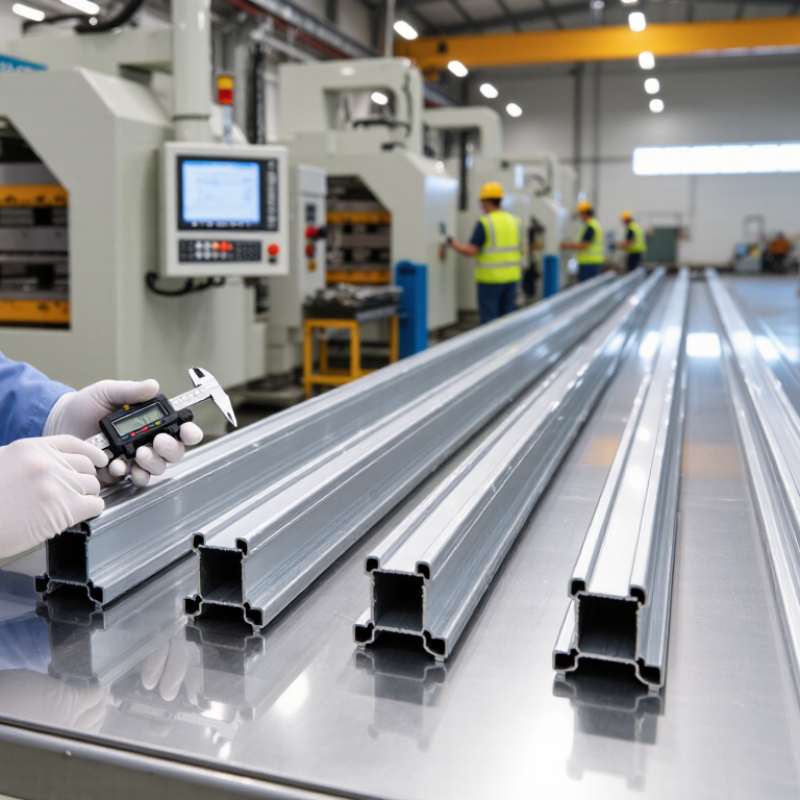
Choosing an aluminium frame supplier in 2026 should begin with a clear project definition. Do not start with price alone. Describe the frame’s purpose, dimensions, load capacity, and expected service life. Note whether it supports glass, machinery, panels, or moving components. A frame beside a coastal walkway needs different protection from one used inside a dry workshop.
Record critical measurements in one document. Include profile size, wall thickness, connection method, surface finish, and acceptable tolerances. A few millimetres can affect alignment. It is easy to overlook access space for tools and fasteners. We have seen attractive drawings fail because cable routes and maintenance gaps were missing.
Ask suppliers how they verify material grades, cutting accuracy, joint strength, and surface consistency. Request sample sections or a small trial assembly before approving full production. Check their inspection records and ability to provide batch traceability. Relevant testing should match the frame’s real risks, including vibration, corrosion, impact, or repeated loading. Avoid vague claims such as “heavy duty.” Define measurable limits instead. Your requirements may change after installation, and that is normal. Leave room for adjustments where practical. A perfect specification is rarely perfect in the field.
When evaluating an aluminium frame supplier in 2026, inspect the material before admiring the finished frame. Ask for alloy certificates, temper records, and batch traceability. For structural frames, confirm the specified alloy matches the required strength and corrosion resistance. A supplier should explain extrusion tolerances clearly, not hide behind general claims. Request sample profiles, dimensional reports, and surface finish specifications. Small variations can affect assembly.
Manufacturing capability matters beyond equipment lists. Check whether the supplier manages extrusion, cutting, CNC machining, drilling, welding, and surface treatment internally or through controlled partners. Review their tooling experience and production capacity. Ask how they handle sudden design changes. A capable team can identify weak joints, uneven walls, or distortion before mass production. I would not treat a polished prototype as proof. Production consistency matters more.
Quality systems reveal daily discipline. Look for incoming material inspection, first-article approval, calibrated measuring tools, and documented final checks. Statistical process control can expose gradual dimensional drift. Nonconforming products should receive recorded corrective actions, not quick repairs without analysis. Review inspection samples from different batches. No supplier is flawless. However, reliable suppliers show problems openly and respond with evidence. Their delivery records, change-control process, and technical communication should support the same level of confidence.
How to Choose an Aluminium Frame Supplier in 2026?
A reliable supplier should show current certifications, not just display logos on a website. Ask for the certificate number, issuing body, scope, and expiry date. ISO 9001 can indicate controlled quality processes, while environmental certification may support sustainability goals. Request material test reports for alloy grade, temper, tensile strength, and surface finish. Traceability should connect each batch to production records. Ask for evidence.
Customization deserves equal attention. Confirm whether the supplier can handle your profile drawings, tolerances, corner joints, drainage paths, and mounting points. A capable engineering team should review load requirements before quoting. Request a sample corner or small prototype, not only a polished catalogue image. Check machining accuracy with actual inspection data. Details matter.
Technical support often separates a useful partner from a low-cost source. Ask who will answer design questions, how quickly revised drawings are returned, and whether support continues after delivery. Clarify packaging, installation guidance, replacement parts, and corrective-action procedures. I have learned that fast replies do not always mean strong engineering. My checklist is not flawless either. A trial order can expose communication gaps, inconsistent finishes, or unclear responsibility before a larger commitment. Choose a supplier willing to document limits, admit risks, and improve the process with you.
Compare certifications, customization options, and technical support using a practical 100-point evaluation framework.
Certification evidence verifies quality, environmental, and occupational-safety management systems. Customization should be assessed through alloy and temper selection, dimensional tolerances, surface-finishing options, and drawing control. Technical support should cover design review, prototyping, production communication, and after-sales issue resolution. The weighting is a neutral buyer-side benchmark, not a ranking of any specific supplier.
Reference standards: ISO 9001:2015, ISO 14001:2015, and ISO 45001:2018. Certification status should be verified with the issuing certification body.
How to Choose an Aluminium Frame Supplier in 2026?
Pricing, lead times, logistics, and long-term reliability deserve equal attention when selecting an aluminium frame supplier. A low quotation may exclude tooling, surface treatment, packaging, or inspection fees. Request an itemised offer with material grade, profile dimensions, tolerance, finish, and delivery terms. Compare complete costs, not only the unit price.
Lead times should be tested against real production steps. Ask how many days cover drawing approval, extrusion, cutting, finishing, assembly, and final inspection. A supplier promising seven days without capacity evidence deserves careful questioning. Request a production schedule and one trial order. During a previous sourcing review, the cheapest supplier missed a finishing deadline by nine days. The delay affected installation more than the original savings helped.
Logistics also reveal operational maturity. Check pallet dimensions, protective materials, loading photos, export documents, and shipment tracking procedures. Frames can arrive scratched when separators are too thin or bundles are overloaded. Confirm who manages damaged goods and how quickly claims receive responses. Long-term reliability requires more than a successful sample. Review quality records, corrective-action reports, equipment maintenance, and customer references. Ask whether backup machinery exists during breakdowns. No supplier is flawless. The useful question is how honestly they report problems and fix them. Keep communication records, measure delivery performance, and reassess the supplier after every major order.
The following procurement scorecard uses practical 2026 buyer benchmarks. Price and lead-time ranges are indicative planning references only and should be validated against the alloy, profile complexity, finish, order volume, tooling requirements, destination, and current metal-market conditions.
| Evaluation Area | Metric to Check | Practical Buyer Benchmark | Warning Sign | Suggested Weight |
|---|---|---|---|---|
| Pricing Transparency | Aluminium price basis | The quotation clearly separates metal value, conversion cost, finishing, packaging, tooling, freight, and taxes. Metal-related adjustments identify the pricing index, quotation date, and adjustment formula. | One unexplained all-in price with no validity period or adjustment mechanism. | 10% |
| Tooling and non-recurring costs | Tooling is itemized separately, with ownership, maintenance responsibility, expected tool life, replacement terms, and sample approval requirements stated in writing. | Tooling included in the unit price without ownership or transfer terms. | 8% | |
| Total landed cost | Compare unit price plus tooling, finishing, packaging, inland transport, ocean or air freight, duties, insurance, inspection, and inventory carrying cost. | Selection is based only on ex-works or factory-gate price. | 7% | |
| Lead Times | First article and tooling schedule | For a new custom extrusion, a planning allowance of approximately 5–8 weeks is commonly used for tooling, samples, corrections, and approval, depending on complexity and capacity. | A very short promise that excludes tooling, sample approval, or engineering changes. | 10% |
| Repeat-order production time | For an approved, stocked, or regularly scheduled profile, approximately 2–4 weeks is a useful planning range before dispatch; custom finishing and batch size may extend this period. | The supplier gives only a single date and does not define the order-confirmation or dispatch point. | 8% | |
| Schedule performance | Request the last 6–12 months of on-time-in-full performance. A target of at least 95% is a reasonable qualification threshold for a strategically important supplier. | No historical delivery data, no agreed tolerance, or repeated unexplained schedule changes. | 8% | |
| Logistics Capability | Shipping and trade terms | The supplier can quote consistently under agreed Incoterms, provide carton or pallet dimensions, specify gross and net weights, and identify export-document responsibilities. | Incoterms are omitted or changed between quotations without a cost reconciliation. | 7% |
| Packaging and damage control | Packaging protects long profiles from bending, abrasion, moisture, and edge damage. Packing specifications are approved before mass production. | Mixed lengths, insufficient separators, exposed finished surfaces, or no packaging test or approval process. | 6% | |
| Inventory and continuity planning | The supplier can explain safety-stock options, minimum order quantities, consolidation plans, alternate routes, and a response plan for port, carrier, or capacity disruptions. | No contingency plan and complete dependence on one production line or one transport route. | 6% | |
| Long-Term Reliability | Quality management and traceability | Documented quality procedures, lot or heat traceability, inspection records, calibration control, and a defined nonconformance process are available for review. | Quality is described only as “inspected” with no records, sampling plan, or corrective-action process. | 10% |
| Technical compliance | The supplier confirms alloy, temper, dimensional tolerances, straightness, surface finish, coating or anodizing requirements, and inspection methods before production. | Material or finish is substituted without written approval or revision control. | 8% | |
| Defect and claim performance | Ask for measurable defect, return, and corrective-action data. Acceptance criteria should be agreed before the first shipment, with response ownership and closure dates defined. | Claims are handled case by case, with no root-cause analysis or recurring-defect prevention. | 7% | |
| Communication and business continuity | A named account owner, documented escalation path, engineering support, change-notification process, and continuity plan are in place before award. | Slow responses, frequent personnel changes, unapproved process changes, or no documented backup capacity. | 8% | |
| Total Assessment Weight | 100% | |||
Choosing an aluminium frame supplier in 2026 requires evidence, not polished promises. I request samples from the proposed production line, not showroom pieces. Each sample should show alloy grade, wall thickness, weld quality, surface finish, and dimensional tolerance. I also compare two batches made weeks apart. Consistency matters more than one perfect frame.
A sample is only a starting point. I review the supplier’s quality certificates, calibration records, material traceability, and corrective-action reports. The ISO Survey 2023 recorded more than 1.2 million ISO 9001 certificates worldwide, but certification alone does not guarantee reliable production. An independent audit should follow. I check extrusion presses, inspection points, packaging areas, and rejected parts. I have sometimes trusted clean facilities too quickly. That was a mistake. Production records reveal more than fresh paint.
Customer reviews need practical detail. Look for comments about delivery accuracy, profile tolerances, communication, and after-sales responses. Ask for references from projects with similar frame sizes and environmental demands. Verify whether reviews describe repeated orders or only one shipment. Sustainability claims also deserve proof. The International Aluminium Institute reports that recycled aluminium can require up to 95% less energy than primary aluminium. Ask for documented recycled content and chain-of-custody evidence. Independent testing, dated audit findings, and honest answers to difficult questions build stronger confidence than impressive brochures.
Describe the frame’s purpose, dimensions, load capacity, and expected service life. Mention glass, machinery, panels, or moving parts. Be specific.
Record profile size, wall thickness, connection method, surface finish, and acceptable tolerances. Include tool access, fastener space, cable routes, and maintenance gaps. Small errors matter.
Match testing to real conditions, including vibration, corrosion, impact, or repeated loading. A frame near salt air needs stronger protection than one inside a dry workshop. Environment changes everything.
Request alloy certificates, temper records, sample profiles, dimensional reports, and batch traceability. Confirm the material matches required strength and corrosion resistance. Do not rely on appearance.
Check cutting, machining, drilling, welding, extrusion, and surface treatment capabilities. Ask whether these processes are controlled internally or by qualified partners. Equipment lists prove little.
Request samples from the proposed production line, not only showroom pieces. Compare samples from separate batches made weeks apart. Consistency matters more than one attractive frame.
Yes. Review incoming inspections, first-article approvals, calibrated tools, final checks, and corrective-action records. Inspect production areas, measuring points, packaging zones, and rejected parts. Clean floors are not proof.
Look for details about delivery accuracy, tolerances, communication, and after-sales responses. Ask for references from projects with similar sizes and environmental demands. Request documented recycled content and traceability evidence. I have trusted vague claims before. That was a mistake.
Choosing an aluminium frame supplier in 2026 requires a clear understanding of your project’s technical, aesthetic, and performance requirements. Start by defining the frame size, load capacity, surface finish, tolerances, application environment, and expected service life. Then assess each supplier’s material quality, alloy selection, manufacturing equipment, production capacity, and quality-control procedures. A reliable supplier should be able to explain how it manages consistency from raw material inspection through final delivery.
You should also compare relevant certifications, customization capabilities, engineering assistance, and communication standards. Pricing should be evaluated together with lead times, packaging, logistics, warranty policies, and long-term supply stability rather than as a standalone figure. Before making a decision, request samples, review technical documentation, conduct an audit when practical, and examine genuine customer feedback. The best supplier will demonstrate dependable performance, transparent processes, responsive technical support, and the ability to deliver Frame Aluminium products consistently as your project develops.
