
The search for the Top Extruded Aluminium Profiles Manufacturers Worldwide begins with evidence, not glossy claims. Extrusion lines may look similar, yet billet quality, die design, cooling control, and surface finishing create major differences. A bright silver frame can hide inconsistent wall thickness.
The International Aluminium Institute reported global primary aluminium production of approximately 70.5 million tonnes in 2023. This scale supports construction, transport, solar systems, electronics, and industrial equipment. Grand View Research estimated the global aluminium extrusion market at about USD 83.7 billion in 2023. It also projects strong growth through 2030. These figures show opportunity, but they do not prove that every manufacturer delivers reliable profiles.
Tom Dobbins, former president and chief executive of the Aluminum Association, stated, “Aluminum is an essential material for our economy and national security.” His comment reflects aluminium’s strategic value, although extrusion buyers need more specific evidence. Factory audits, alloy certificates, dimensional reports, tensile-test results, and clear delivery records matter more than broad promises.
Look closely.
The strongest manufacturers usually demonstrate complete process control. They manage alloy selection, homogenization, extrusion speed, aging, cutting, anodizing, powder coating, and packaging. Some also provide low-carbon aluminium options and recycled-content documentation. Those details can reduce waste and improve project consistency.
Still, no worldwide ranking remains perfect. Capacities change, certifications expire, and smaller specialists may outperform larger groups in one niche. This guide compares manufacturers through measurable capabilities, application experience, export reach, quality systems, sustainability reporting, and customer support. The evaluation may not capture every regional strength. That limitation deserves honesty.
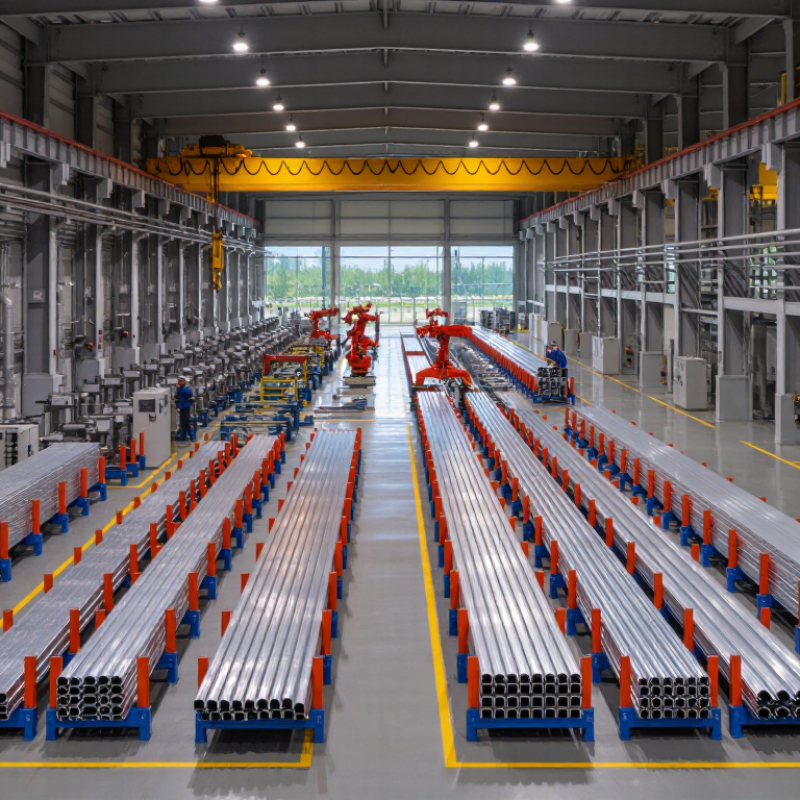
Extruded aluminium profiles are shaped sections produced by forcing a heated aluminium billet through a designed die. The die controls the profile’s cross-sectional form. This process creates channels, frames, rails, and complex hollow shapes with consistent dimensions. Unlike cut sheet metal, extrusion can integrate several functions into one piece. A window frame may include a glazing channel, drainage path, and reinforcement pocket. A machine guard may use grooves for fasteners. Small details matter. Wall thickness, corner radius, and alloy selection affect strength, weight, and production stability. Experienced engineers also consider how the profile will be cut, joined, finished, and installed.
Their role extends beyond appearance. Profiles support loads, guide movement, protect components, and help build modular structures. In construction, they can form curtain walls, doors, partitions, and solar mounting systems.
In industrial equipment, they create adjustable workstations and protective enclosures. Aluminium offers low density, corrosion resistance, and useful thermal conductivity. Surface treatments can improve durability and appearance, but they cannot correct poor geometry.
The process is not flawless. Profiles may twist, bow, or develop marks when cooling conditions vary. A polished surface can hide a dimensional problem. Reliable manufacturers therefore use die maintenance, controlled extrusion temperatures, sampling, and dimensional inspection. Even then, a profile that meets a drawing may perform poorly if installation forces were underestimated.
That point deserves more attention.
Top Extruded Aluminium Profiles Manufacturers Worldwide?
Comparing global manufacturers requires more than checking press capacity or a polished website. The International Aluminium Institute reported approximately 70.6 million tonnes of primary aluminium production in 2023. This scale makes material traceability essential. Request alloy certificates, heat numbers, and independent chemical analysis. Then compare them against standards such as EN 755 or ASTM B221.
Quality appears in small details.
Review die design experience, dimensional tolerances, straightness, surface finish, and cutting accuracy. Ask for inspection records from recent production batches, not only sample photographs. A capable supplier should explain how it controls billet temperature, extrusion speed, quenching, ageing, and packaging. ISO 9001 certification supports process discipline, but it does not replace physical testing. Certificates can look reassuring while production still varies.
Sustainability also deserves measurable evidence. The International Aluminium Institute states that recycled aluminium can require roughly 5% of the energy used for primary aluminium production. Compare recycled content, electricity sources, scrap recovery, and carbon data using consistent boundaries. Delivery reliability matters too: examine historical lead times, minimum order quantities, tooling ownership, and contingency plans. I would not rank a manufacturer from one impressive quotation. Site audits, trial orders, and independent tensile testing often reveal uncomfortable gaps. That extra work feels slow, but it protects long-term performance.
| Comparison Dimension | Typical International Benchmark | Why It Matters | Recommended Verification Evidence |
|---|---|---|---|
| Common Alloy Capability | 6060 and 6063 for architectural profiles; 6005A and 6061 for higher-strength structural applications. | Alloy selection affects strength, surface quality, corrosion resistance, machinability, and extrusion speed. | Alloy certificates, chemical composition reports, and mechanical-property test results. |
| Temper Range | Common tempers include T5 and T6; exact tensile and yield values depend on alloy, profile geometry, and applicable standard. | The temper determines the finished profile’s strength and suitability for structural or load-bearing use. | Mill test certificates and independent tensile-testing records. |
| Extrusion Press Range | Commercial production networks commonly cover approximately 600 to 25,000 metric tons, with some facilities offering larger presses. | Press capacity influences maximum profile size, wall thickness, weight per metre, and production flexibility. | Equipment list showing press tonnage, billet diameter, maximum profile envelope, and production location. |
| Profile Size Capability | Typical capability ranges from small precision sections below 20 mm to large profiles with a circumscribed diameter of approximately 300–500 mm, depending on press capacity and geometry. | A manufacturer must match the required cross-section, wall thickness, length, and dimensional complexity. | Profile envelope charts, sample drawings, tooling records, and dimensional inspection reports. |
| Dimensional Tolerance Control | Production is generally controlled to the applicable requirements of EN 755-9, EN 12020-2, ASTM B221, or equivalent customer specifications. | Tight tolerances reduce assembly problems, machining allowances, material waste, and installation delays. | Published tolerance tables, calibrated measuring equipment, capability studies, and inspection plans. |
| Surface Finishing Options | Common options include anodizing, powder coating, liquid coating, mill finish, brushing, polishing, and wood-effect finishing. | Finishing determines appearance, weather resistance, corrosion protection, and maintenance requirements. | Finish samples, coating specifications, color-control procedures, and laboratory test reports. |
| Anodizing Capability | Architectural anodizing commonly uses coating classes around 10–25 μm, subject to the project specification and applicable standard. | Coating thickness and sealing quality affect color consistency, durability, and resistance to environmental exposure. | Coating-thickness measurements, sealing tests, color records, and compliance documentation. |
| Powder-Coating Capability | Typical architectural powder-coating thickness is approximately 60–120 μm, depending on the coating system and end-use environment. | Correct pretreatment and film thickness are essential for adhesion, corrosion resistance, and long-term appearance. | Pretreatment process records, dry-film thickness reports, adhesion tests, and accelerated corrosion-test results. |
| Fabrication Services | Higher-value suppliers may provide cutting, CNC machining, drilling, punching, tapping, bending, assembly, and kitting. | Integrated fabrication can reduce supplier count, handling costs, and dimensional variation between processes. | Machine specifications, process tolerances, first-article inspection reports, and sample assemblies. |
| Tooling and Die Development | Typical die-development cycles range from approximately 2–6 weeks for standard profiles, depending on complexity, trials, and approval requirements. | Efficient die engineering improves first-trial success, profile stability, and project launch speed. | Die-design workflow, trial schedules, correction policy, tooling ownership terms, and die-life records. |
| Quality Management | ISO 9001 certification is a widely used baseline; sector-specific systems may also include IATF 16949, ISO 14001, or ISO 45001. | Documented quality systems improve traceability, corrective action, process control, and delivery consistency. | Valid certificates, audit reports, nonconformance procedures, and corrective-action records. |
| Testing and Inspection | Relevant checks may include chemical analysis, tensile testing, hardness testing, dimensional inspection, surface inspection, coating thickness, and color measurement. | A robust inspection system identifies defects before shipment and supports customer and regulatory audits. | Inspection plans, calibration certificates, laboratory scope, control plans, and traceability records. |
| Recycled Aluminium Content | Recycled content varies by product and supply chain; verified declarations should distinguish pre-consumer and post-consumer material. | Recycled content can reduce embodied carbon while maintaining the required alloy and performance specifications. | Chain-of-custody documents, recycled-content declarations, environmental product declarations, or third-party verification. |
| Sustainability Performance | Key indicators include electricity source, energy consumption, scrap-recycling rate, greenhouse-gas emissions, water use, and waste-management controls. | Environmental performance increasingly influences procurement decisions and building-certification outcomes. | ISO 14001 records, audited carbon data, environmental reports, and product-level carbon declarations. |
| Production Capacity and Scalability | Large multi-line production networks may offer annual extrusion capacity ranging from tens of thousands to several hundred thousand tonnes, depending on facility scope. | Capacity and backup lines help support long-term programs, seasonal demand, and urgent replacement orders. | Rated capacity, recent utilization data, production-line availability, and contingency plans. |
| Minimum Order and Commercial Flexibility | Minimum order quantities vary widely by alloy, finish, tooling, and production schedule; custom profiles often require a tooling charge and a defined minimum batch. | Flexible ordering is important for prototypes, phased construction, spare parts, and low-volume industrial projects. | Written quotation, tooling terms, minimum batch quantity, price-break schedule, and sample policy. |
| Lead-Time Reliability | For established tooling and repeat orders, production lead times commonly fall within approximately 3–8 weeks, excluding international transport and exceptional capacity constraints. | Reliable delivery is often more valuable than the shortest quoted lead time. | Historical on-time-delivery data, production schedules, order-status procedures, and escalation contacts. |
| Export and Logistics Capability | International suppliers may support export packing, container loading, customs documentation, multimodal transport, and regional warehousing. | Effective logistics reduce transit damage, customs delays, inventory risk, and total landed cost. | Packaging specifications, Incoterms, export references, insurance arrangements, and shipment-tracking process. |
Leading Extruded Aluminium Profile Manufacturers Worldwide
Leading extruded aluminium profile manufacturers worldwide serve construction, transport, electronics, and industrial equipment sectors. Their capabilities often extend beyond pressing aluminium through a shaped die. Reliable manufacturers manage alloy selection, die design, extrusion speed, heat treatment, cutting, and surface finishing with documented controls.
A serious supplier should provide clear alloy certificates, dimensional reports, and traceable batch records. Factory evaluations should examine billet storage, die maintenance, press capacity, and inspection equipment. Ask for samples with narrow tolerances, clean corners, consistent wall thickness, and a finish that survives handling. Small details matter.
Quality is not defined by production volume alone. Some large facilities may offer stable output but limited customization. Smaller plants may respond faster, yet struggle with capacity during peak demand. No supplier is perfect. Buyers should compare lead times, tooling costs, packaging methods, and corrective-action procedures. A useful audit also checks how defects are recorded and resolved. Even experienced procurement teams can overlook packaging, causing scratches before delivery. Clear drawings and realistic tolerance requirements reduce that risk. Local logistics, export documentation, and technical communication also influence the final result. The best partnership comes from evidence, not polished promises.
Asia accounted for the largest share of global primary aluminium production in 2023, followed by the Gulf Cooperation Council, Europe, and North America. These regional production levels indicate the scale of the raw-material and industrial ecosystem supporting aluminium extrusion manufacturers. Data: International Aluminium Institute, 2023 regional production statistics.
Manufacturing strength starts with press capability, not catalogue size. The 2024 USGS Mineral Commodity Summaries recorded about 70 million tonnes of primary aluminium production in 2023. This scale supports broad billet availability, but it does not guarantee stable extrusion quality. Buyers should examine press tonnage, billet diameter, die-design control, and production traceability. A capable manufacturer can explain how it manages wall thickness, weld lines, twisting, and dimensional variation across long profiles.
Standards reveal more than marketing language. Structural and general-purpose profiles commonly reference ASTM B221, EN 755, or EN 12020. ISO 9001 supports process control, while ISO 14001 indicates an environmental management framework. Reliable facilities should provide chemical reports, tensile-test results, hardness data, and inspection records for each batch. Ask for tolerance tables. Check the actual samples.
Product specialization also matters. Heat-sink producers need precise fins and controlled thermal performance. Solar-frame suppliers require consistent joints, corrosion-resistant finishes, and repeatable cutting. Architectural profiles demand clean surfaces, tight corner geometry, and dependable anodizing or powder coating. Transport applications may require stronger alloys, CNC machining, and fatigue-focused validation. A glossy catalogue proves little. Capacity figures can mislead when they exclude finishing, tooling, or secondary machining. The better question is simple: can the factory reproduce the same profile after six months, under documented conditions?
How to Select a Suitable Aluminium Profile Manufacturer
Choosing a suitable aluminium profile manufacturer requires more than comparing catalog prices. Global leaders are judged by process control, engineering depth, and delivery reliability. Ask which alloys they extrude, what press sizes they operate, and whether dies are made internally or by qualified partners. A capable supplier should explain tolerances clearly, not hide behind broad claims. Request inspection reports, material certificates, and a sample matching your drawing. Small details matter.
Examine the full production route. It should cover die design, billet heating, extrusion, aging, cutting, surface treatment, and protective packing. Check whether anodizing or powder coating is tested for color, thickness, adhesion, and corrosion resistance. For tight assemblies, confirm straightness, twist, corner radius, and cut-length tolerances before placing a large order. Ask how nonconforming pieces are isolated and traced. Batch codes help.
A factory visit can reveal more than a polished website. Look for calibrated gauges, clean storage, organized dies, and operators who understand your drawings. Review capacity during peak seasons, minimum order quantities, tooling ownership, and replacement policies. Communication is also technical; slow replies can cause costly production delays. I would not select a supplier from one attractive sample alone. Samples may receive extra attention. A pilot batch exposes weaknesses in consistency, packaging, and final inspection. Even experienced buyers sometimes overlook shipping damage or unclear responsibility for tooling changes.
Compare material traceability, tolerances, surface quality, lead times, tooling costs, and corrective-action procedures.
Request alloy certificates, heat numbers, batch records, and independent chemical analysis.
Review dimensional reports, straightness measurements, wall thickness, corner quality, and cutting accuracy.
Check billet storage, die maintenance, extrusion speed, quenching, ageing, and packaging controls.
No. It supports process discipline but does not replace physical testing.
Compare recycled content, electricity sources, scrap recovery, and carbon data using consistent boundaries.
Large facilities may provide stable output but limited customization.
Review historical lead times, export documents, contingency plans, and packaging methods.
Extruded Aluminium Profiles are shaped aluminium components produced by forcing heated aluminium billets through a designed die, creating precise and consistent cross-sections for construction, transportation, machinery, electronics, and many other applications. This article explains their structural, functional, and design roles, while outlining the main criteria for comparing manufacturers worldwide, including production capacity, alloy options, dimensional accuracy, surface treatment, quality control, delivery reliability, and technical support.
It also introduces the capabilities and product specialties commonly found among leading manufacturers, such as advanced extrusion technology, customized die development, anodizing, powder coating, fabrication, and compliance with recognized manufacturing standards. Finally, the article provides practical guidance for selecting a suitable supplier by considering project requirements, material performance, customization needs, certification, communication, pricing, and long-term service. A careful evaluation of these factors can help buyers identify a dependable partner and achieve consistent results across different applications.
