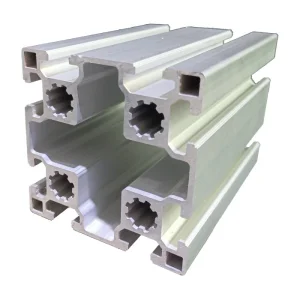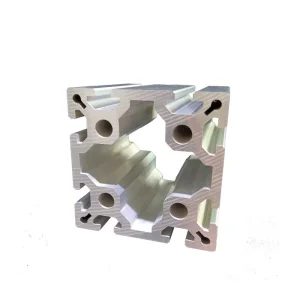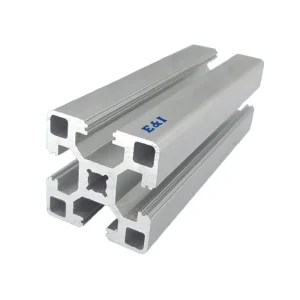
Engineered for high load-bearing capacity, industrial structures, and cleanroom automation design environments.
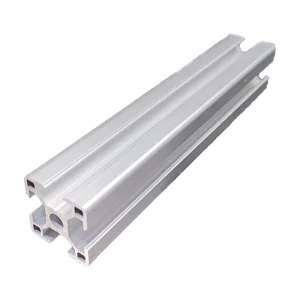
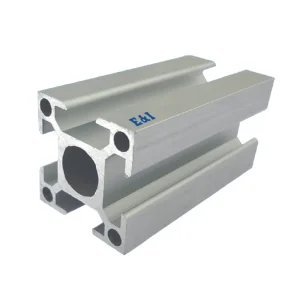
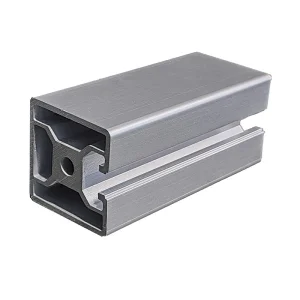
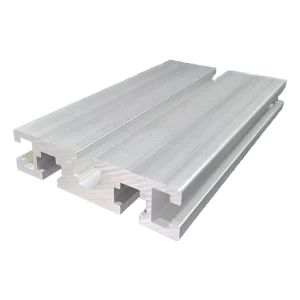
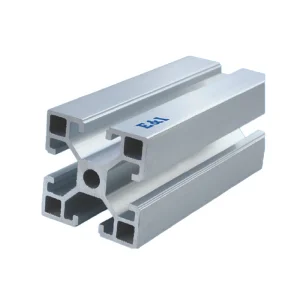
The global demand for high-strength structural aluminium profiles has witnessed a monumental paradigm shift. Traditionally, steel was the default standard for load-bearing frameworks. However, the rise of automation, electric vehicle (EV) production lines, aerospace engineering, and precision robotics has introduced stringent lightweighting, high strength-to-weight ratio, and corrosion resistance demands.
Aluminium extrusion bearings and high-performance T-slot profiles serve as the foundation of modern mechanical assemblies. High-precision structural systems call for advanced 6000-series alloys (specifically 6063-T5 and 6061-T6) processed under exact thermodynamic conditions to ensure optimal mechanical characteristics, straightness, and microstructural uniformity.
As factories transit into highly dynamic settings with robotic linear actuators and heavy-duty gantries, structural aluminum profiles must withstand both static loads and dynamic cyclic stresses. High fatigue resistance, optimized cross-sectional design, and robust mechanical properties prevent catastrophic fatigue failure and ensure long-term reliability in manufacturing environments.
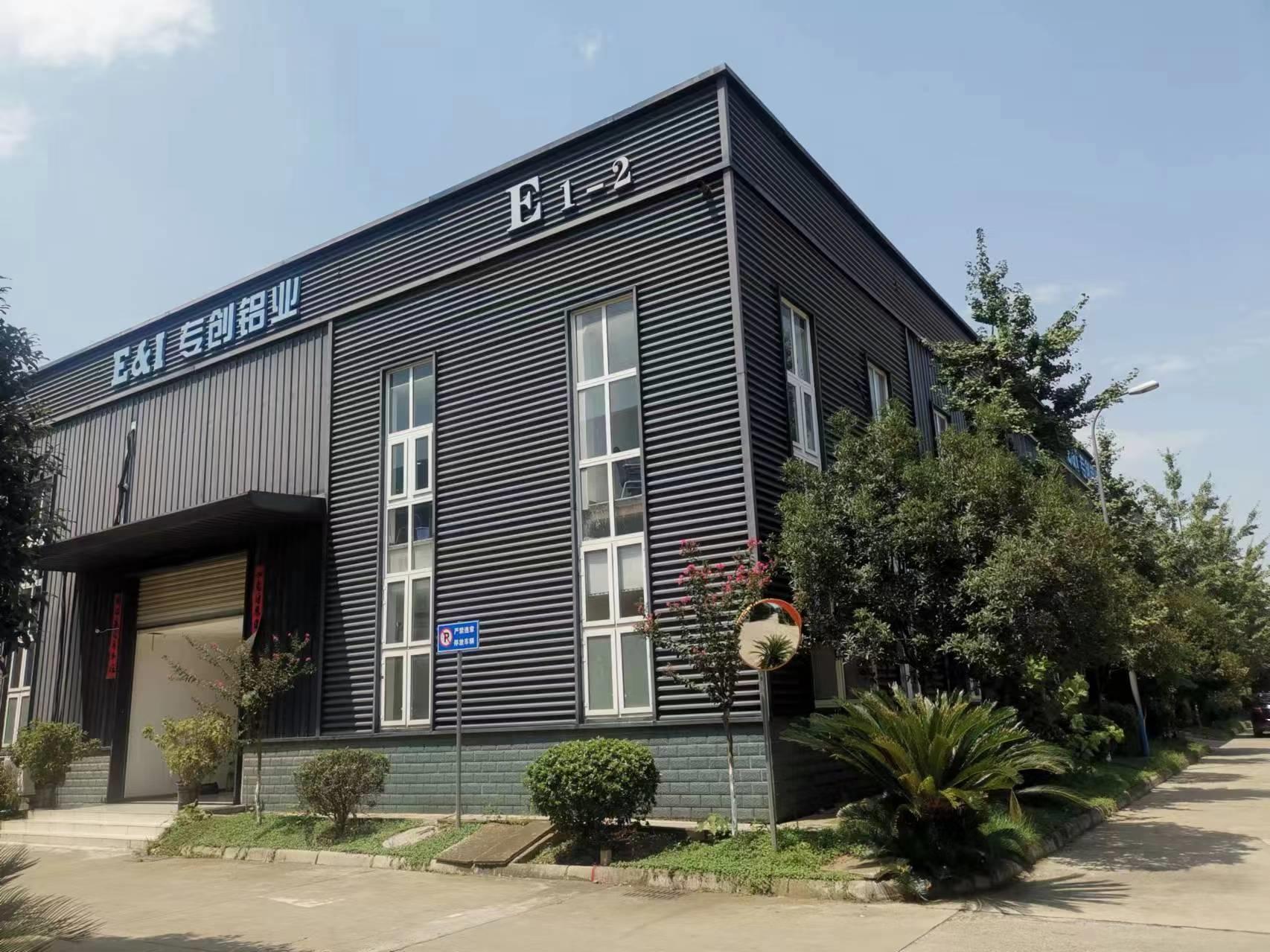
Discover how Chengdu E&I achieves performance indicators matching high international regulatory criteria.
We source raw aluminium ingots with controlled chemical composition limits. Advanced thermal treatment processes guarantee minimal residual stress, high yield strength (up to 250 MPa), and excellent elasticity.
Our automated chemical anodizing treatment provides surface thickness profiles between 10μm and 25μm. This offers resistance against alkaline or acidic environments, making our T-slot systems ideal for harsh manufacturing and laboratory use.
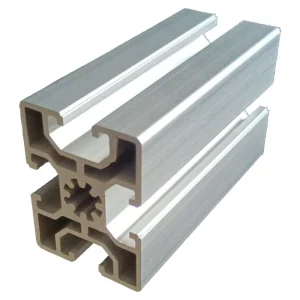
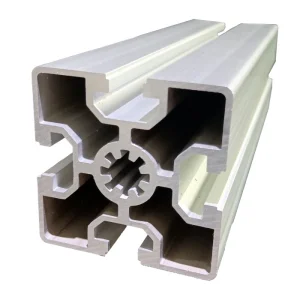
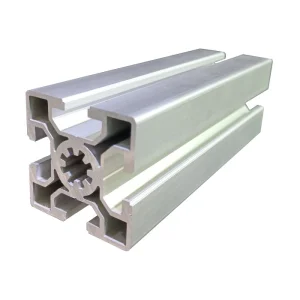
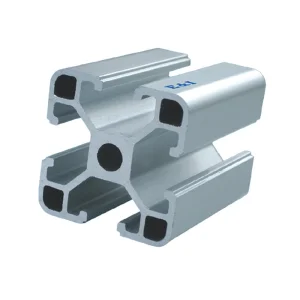
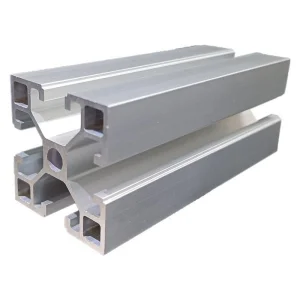
T-slot grooves feature deep taper designs which leverage friction-based clamp loads. This maintains rigid alignment even under persistent vibration or dynamic torque from moving bearing assemblies.
Our operational benchmarks represent the integration of high-grade extrusion engineering and robust industrial supply chain logistics.
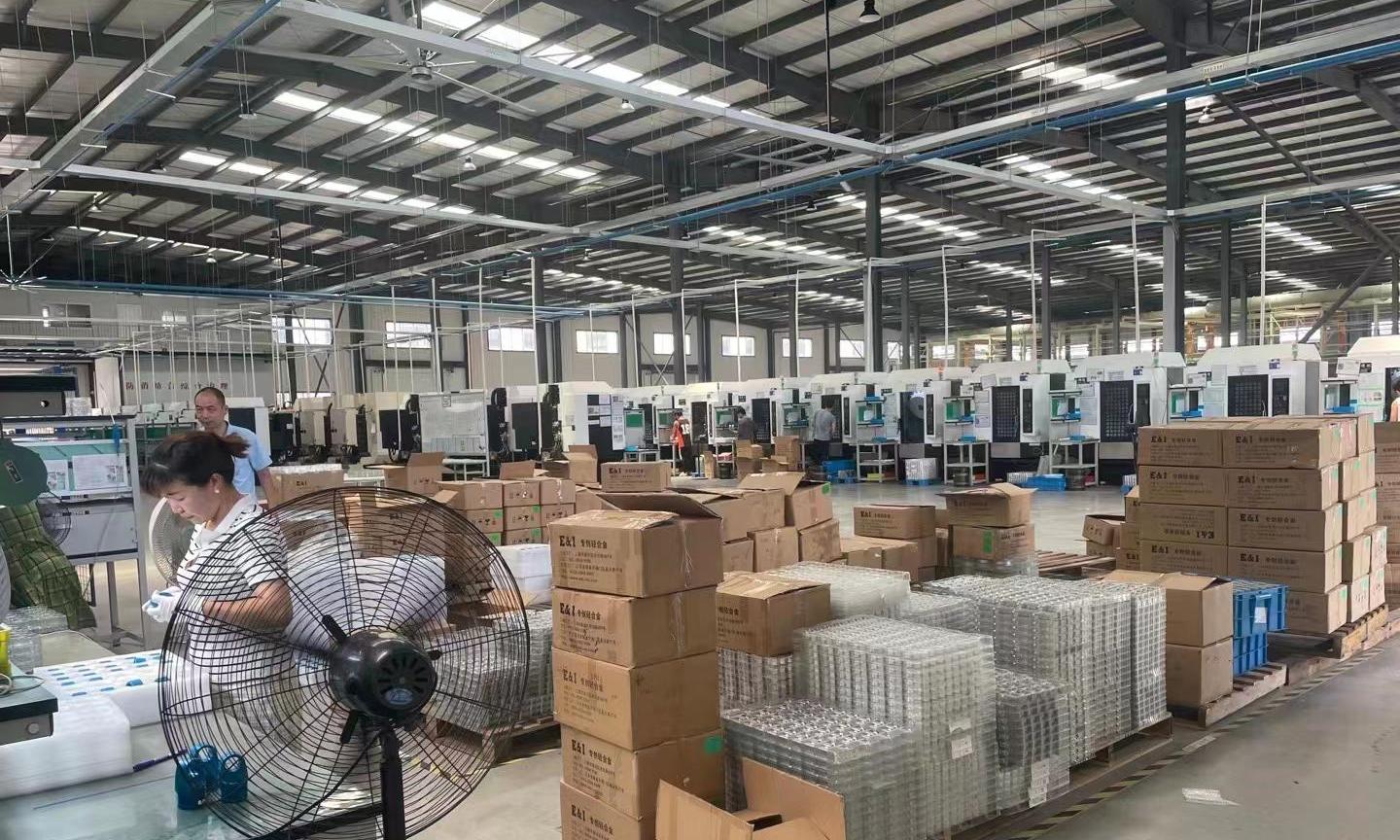
Our state-of-the-art facilities in Chengdu, China, incorporate the core philosophies of Industry 4.0. By integrating ERP-managed production schedules with automated extrusion lines, we achieve end-to-end traceablity, short lead times, and structural consistency.
Global procurement requires supplier partners that can handle volatile market demands. Chengdu E&I offers structural components with a reliable domestic supply chain of high-grade raw materials. Our in-house processes span tool development, automated extrusion, thermal quenching, mechanical straightening, precision CNC drilling, and surface treatment.
We work as a strategic partner to optimize structural designs, reducing unnecessary material usage while maintaining or exceeding calculated safety factors. This approach reduces overall manufacturing costs and optimizes transportation and logistic footprints for overseas clients.
A comprehensive review of the physical metrics and cross-sectional dynamics that govern aluminum structural profiles under mechanical stress.
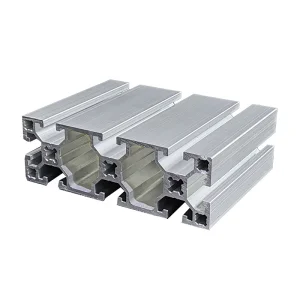
When selecting profiles like the heavy-duty E&I-10-8080H, design engineers must calculate deflection ($f$) under static point loads using standard structural engineering equations. For a simply supported beam with a concentrated center load ($F$):
f = (F * L³) / (48 * E * I)
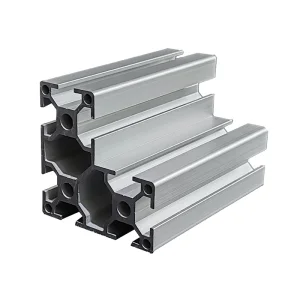
Where E represents the modulus of elasticity of aluminium (typically $70,000 \text{ N/mm}^2$) and I represents the second moment of area (moment of inertia) along the deflection axis. Thanks to Chengdu E&I's optimized internal wall structures, our heavy-duty industrial series maximize the moment of inertia value while minimizing profile linear mass (kg/m). This efficiency allows structures to support heavy linear bearings and automation assemblies without structural sag.
The T-slot design features a precision-angled taper that forms a friction lock when mechanical fasteners are torqued. Under high load-bearing operations, standard roll-in T-nuts distribute tensile forces evenly along the inner profile lip, preventing stripping or localized deformation.
Unlike welded steel structures that easily transmit mechanical vibration, E&I modular aluminum assemblies exhibit superior natural damping characteristics. The mechanical joints absorb micro-vibrations, helping protect sensitive linear bearings, servo motors, and optical sensors.
With a coefficient of linear thermal expansion of $23.1 \times 10^{-6} \text{ K}^{-1}$, aluminium profile structures adapt predictably to heat changes. Our anodized coatings resist thermal cycling degradation, maintaining dimension stability from -40°C to +80°C.
How global system integrators and machine builders deploy E&I solutions across varied operating environments.
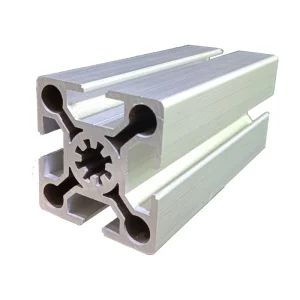
Our heavy-duty profiles, such as E&I-8-100100, are used by international automotive manufacturers for robotic welding safety enclosures, linear motion paths, and main gantry frames. The modular design simplifies modification when adapting to new vehicle models.
EV battery manufacturing requires clean, static-dissipative structures. Our anodized profiles prevent particulate shedding, while specialized T-slot ground accessories ensure proper electrostatic discharge (ESD) pathing, shielding sensitive electronics.
Designed for aircraft component storage, material racks constructed from ENI-8-4040GG handle high weight capacities. Their lightweight nature simplifies ground movement, improving hangar ergonomics and efficiency.
A trusted manufacturing partner delivering high-precision engineering solutions for domestic and international markets.
We treat our team as our most valuable asset, offering competitive salaries and clear career growth. By fostering talent, we build a dedicated workforce that maintains our high standards of product quality.
We focus on generating long-term value for our clients. Every shipment undergo dimensional inspection, surface roughness checks, and load performance testing to match strict specification limits.
Collaborating with leading research groups, our engineering team continuously develops structural designs. Our profiles feature optimized weight-to-strength ratios to meet modern application demands.
We build deep, collaborative relationships with clients, raw material suppliers, and distribution partners. Our goal is to provide reliable structural solutions that support joint long-term growth.
"We align our operations with the core philosophy of 'people-oriented, quality value, technological innovation, and win-win cooperation.' Through these commitments, we deliver high-difficulty, high-precision aluminium alloy solutions to Fortune 500 companies in the automotive, machinery, and aviation sectors."
Practical answers on structural load limits, alloy selection, and custom profile manufacturing.
We primarily use premium 6063-T5, 6063-T6, and 6061-T6 temper alloys. 6063-T5/T6 is ideal for intricate profiles with high surface finish requirements and moderate loads, while 6061-T6 is preferred for heavy-duty structural applications requiring higher tensile and yield strength.
The thickness of the anodized layer directly correlates with corrosion resistance and surface hardness. A layer depth of 10–15 μm is standard for typical indoor assembly environments. For high-humidity, marine, or chemical processing conditions, we recommend a thickness of 20–25 μm to prevent pitting corrosion and wear.
Load capacity is calculated based on the span length, weight distribution, and the profile's moment of inertia ($I_x, I_y$). Engineers use bending stress formulas to verify that maximum deflection does not exceed acceptable limits (often $L/360$ or $L/500$ for precision applications). We provide moment of inertia data sheets for all profiles to support calculation accuracy.
While anodized profiles can technically be welded after grinding away the oxide layer, doing so diminishes the heat-treated temper and alters mechanical properties. Welding also removes the primary benefit of modularity. We recommend using high-strength mechanical fasteners (such as internal joints, brackets, and anchor bolts) to preserve maximum joint rigidity and configuration flexibility.
Our manufacturing processes follow international standards, including ISO 9001:2015. All product dimensions are controlled in accordance with GB/T 5237 (high-precision grade), which meets or exceeds standard European (EN 755) and American (ASTM B221) dimensional tolerance specifications.
For custom profiles requiring new tooling, the process takes approximately 10–14 days for die design and test samples. Once tooling is approved, standard production takes 15–20 days, depending on order volume and surface finishing specifications.
To prevent scratches on anodized surfaces, each profile is interleaved with protective PE film or wrapped in individual paper sleeves. The bundles are then packed into reinforced cardboard tubes, wooden crates, or steel-framed pallets to withstand maritime transit and heavy handling at destination ports.
Yes, we offer complete one-stop post-processing services. Our machining facility is equipped with multi-axis CNC routers capable of precise cutting-to-length, drilling, counterboring, tapping, and milling based on customer drawings, ensuring the components are ready for installation.
Engineered for high load-bearing capacity, industrial structures, and cleanroom automation design environments.