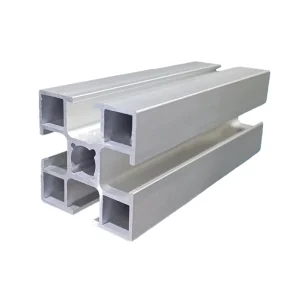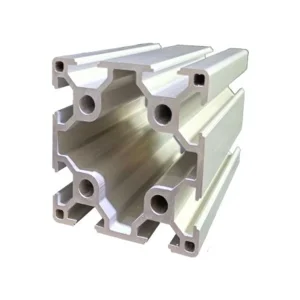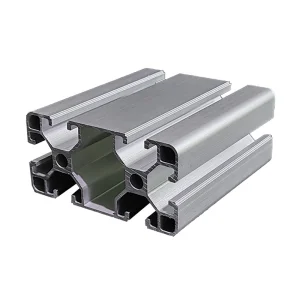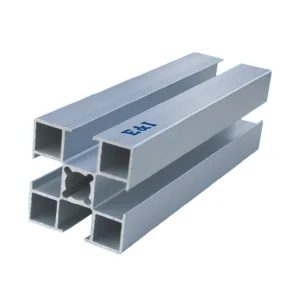
Explore our high-performance structural profiles engineered with precise slot alignments and supreme weight-to-strength ratios.
An authoritative analysis of structural modularity, material engineering, and global logistics optimization in modern automation and clean environments.
Traditional structural frameworks based on welded mild steel are rapidly giving way to modular T-slot aluminum frame systems. Across sectors like automotive assembly, aerospace tooling, consumer electronics manufacturing, and solar racking, industrial operators prioritize flexibility, corrosion resistance, and speed of assembly. High-strength aluminum extrusions, particularly alloys from the 6xxx series (such as 6063-T5 and 6061-T6), provide comparable load capacities to steel components at approximately one-third of the weight.
By eliminating the need for custom welding, grinding, and post-treatment coatings, aluminum profiles facilitate rapid modifications, layout changes, and field service updates. As automation grows globally, modular frames form the physical infrastructure for conveyor systems, automated guided vehicle (AGV) tracks, robot enclosures, and cleanroom modules.
China leads global aluminum extrusion production, offering scale, deep raw material supply chains, and advanced fabrication capabilities. Modern Chinese manufacturers integrate the entire value chain in one facility, covering primary billet processing, alloy customization, die tooling creation, extrusion, surface treatments (anodizing, powder coating, sandblasting), and precise CNC machining.
This vertical integration allows Chinese suppliers to deliver custom profiles at competitive costs with short lead times. By using advanced, multi-megawatt hydraulic presses and automated, computer-monitored cooling beds, manufacturers maintain tight dimensional tolerances (aligned with GB/T 5237 standards) and consistent material hardness. This makes them reliable partners for complex global engineering projects.
Guided by the core philosophy of "people-oriented, quality value, technological innovation, and win-win cooperation," Chengdu E&I Aluminum Industry Co., Ltd. specializes in the research, development, and manufacturing of high-difficulty, high-precision, and high-performance aluminum alloy products.
Partnering with the National Institute of Nonferrous Metals, we leverage one of the light alloy industry's leading research and development teams. We provide clients with complete solutions for aluminum profiles, structural castings, and precision forgings. Our advanced production and testing facilities ensure consistent product quality, helping us build reliable partnerships with global manufacturers, including Fortune 500 automotive companies and commercial airlines.
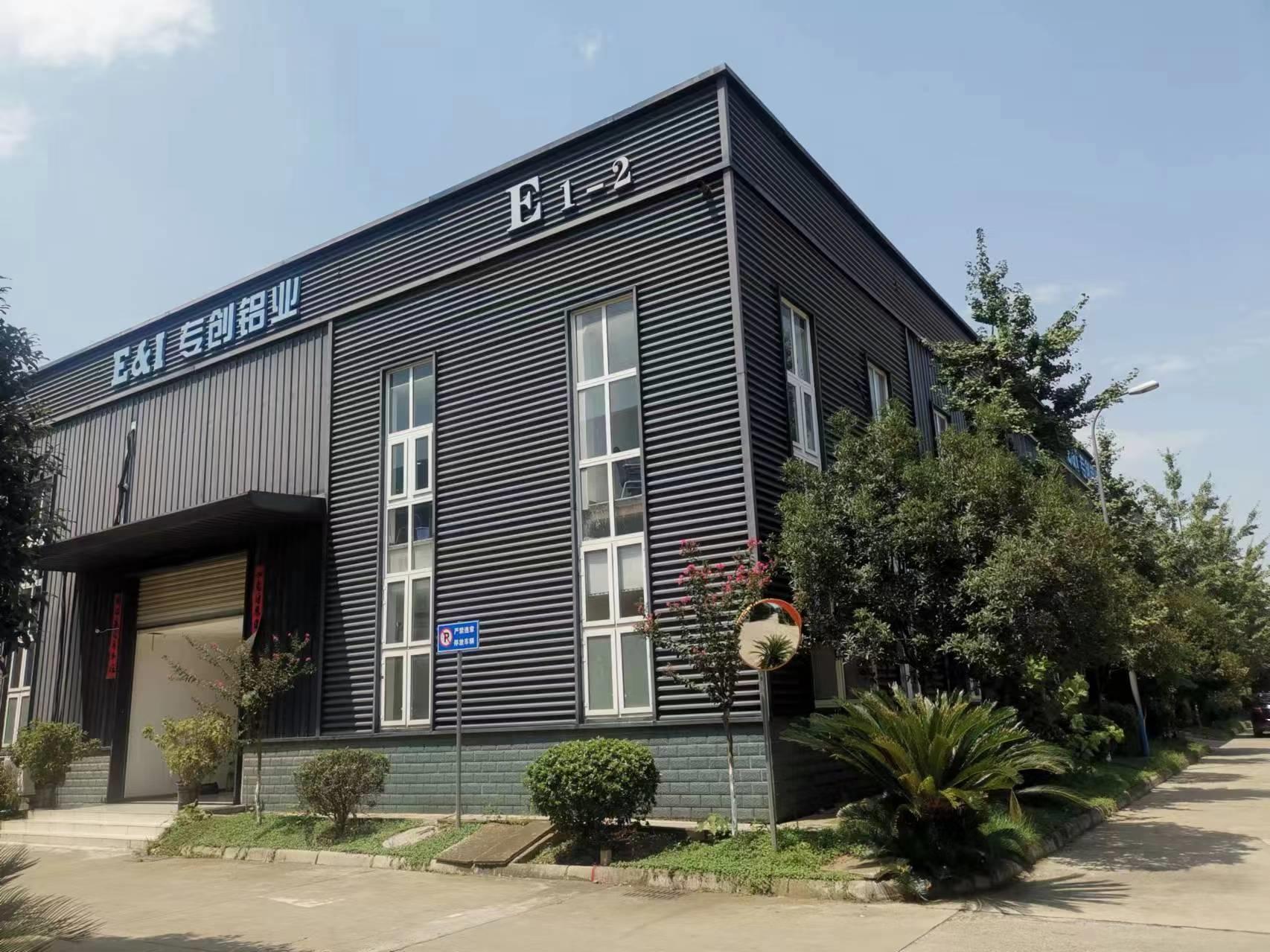
We operate fully equipped manufacturing spaces with specialized production lines for custom design, extrusion, anodizing, and powder coating. Beyond supply, we offer end-to-end design and installation services for structural frames, cleanrooms, assembly conveyors, and custom industrial framing.
Our profiles conform to high-precision national standards. They offer clear surface finishes, high corrosion resistance, and robust mechanical properties. Accompanied by modular accessories like drop-in T-nuts, gussets, and blind joints, our systems create rigid, vibration-resistant structural assemblies.
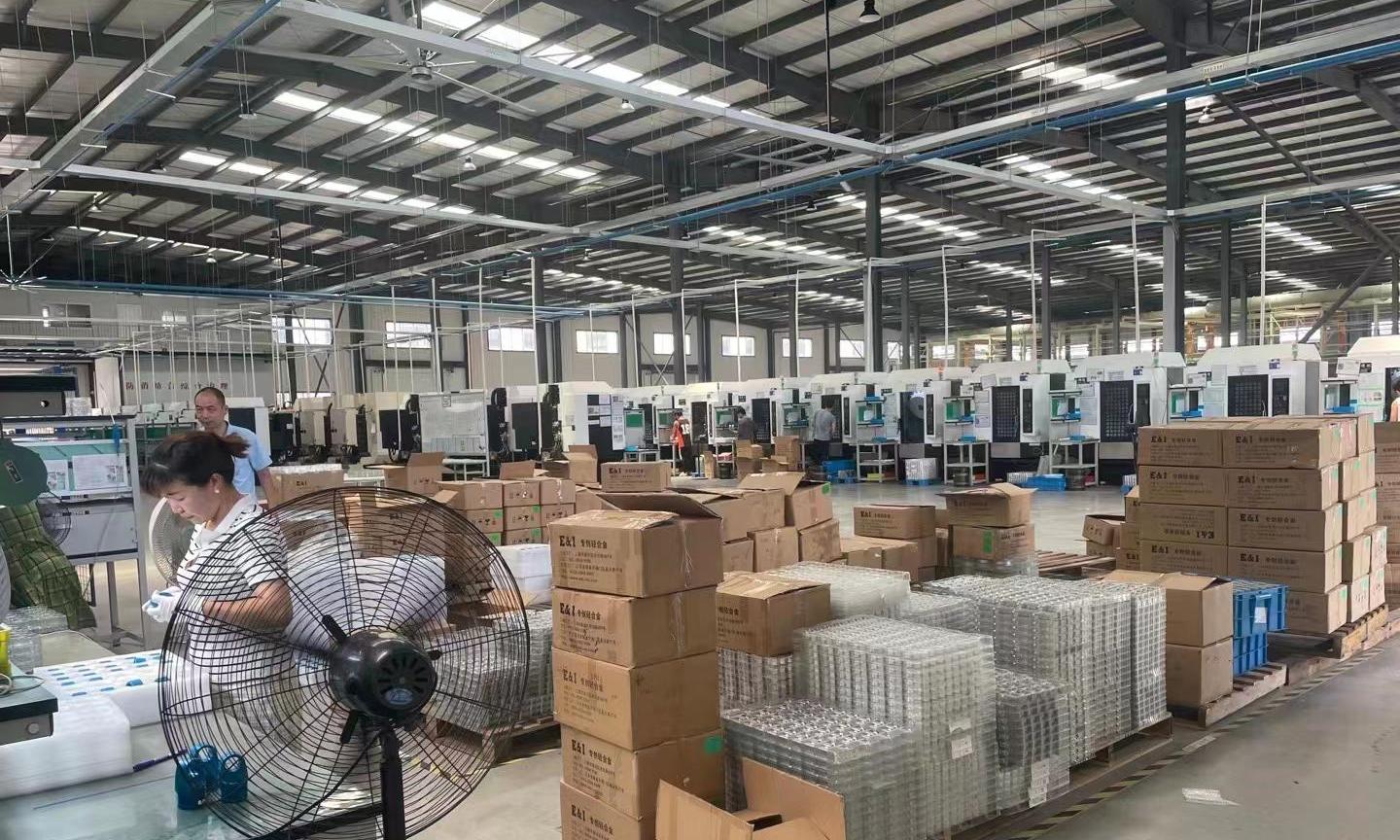
How our commitments guide our engineering, manufacturing, and client relationships.
We treat our team members as our greatest resource. We support their development and provide safe working environments to maintain a skilled, committed workforce.
We focus on delivering durable, precise products that meet international standards, helping optimize assembly workflows and lower long-term maintenance costs.
Through our continuous R&D and collaboration with research institutes, we update profile chemistry and extrusion techniques to stay ahead of industry demands.
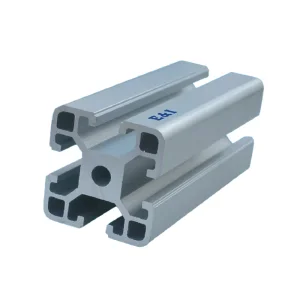
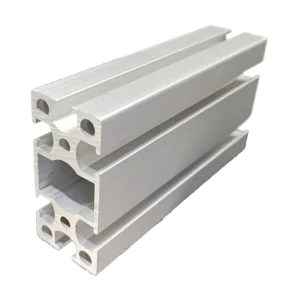
Building safe, reliable industrial frameworks requires understanding how profile dimensions, alloy compositions, and connection types work together. Standard T-slot designs are divided by scale and series (e.g., 20 Series, 30 Series, 40 Series, and heavy-duty 80 Series). The profile size dictates the maximum load capacity, deflection tolerance, and compatibility with standard fasteners.
Most industrial framing profiles are extruded using 6063-T5 aluminum alloy. This alloy balances mechanical strength with surface quality, making it well-suited for clear anodizing. For high-stress applications like machine bases, long-span gantries, and structural crane components, we use 6061-T6 aluminum alloy. T6 tempering involves solution heat-treating and artificial aging, which raises yield strength up to 240 MPa (compared to ~175 MPa for T5).
The slot width determines the size of the bolts and connection accessories used.
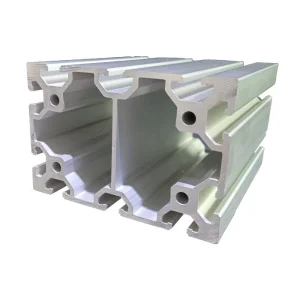
When selecting a profile, engineers calculate the Moment of Inertia ($I_x$, $I_y$) and Section Modulus ($W_x$, $W_y$) to verify deflection limits under static or dynamic loads. For example, a heavy-duty 8080 profile has a significantly higher cross-sectional area and moment of inertia compared to a standard 4040 profile. This allows it to span longer distances without support pillars.
From heavy industry to specialized setups, T-slot profiles provide adaptable structural solutions.
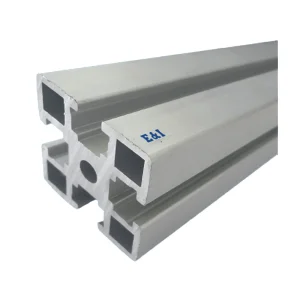
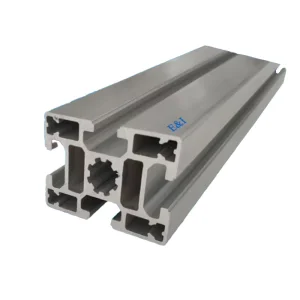
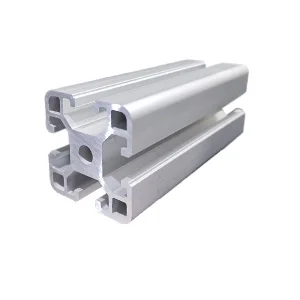
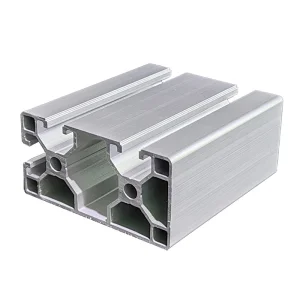
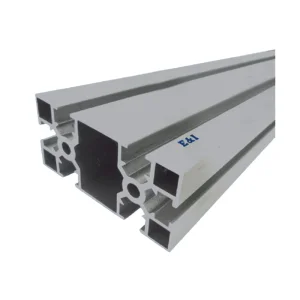
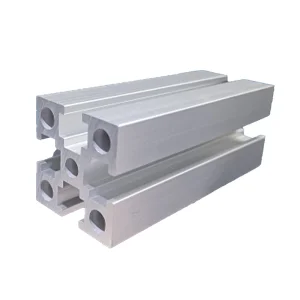
Our 4040 and 4080 anodized profiles are commonly used to build safety barriers, polycarbonate guards, and cleanroom enclosures. Their modular slots make it easy to mount safety sensors and wire routings directly inside the frame.
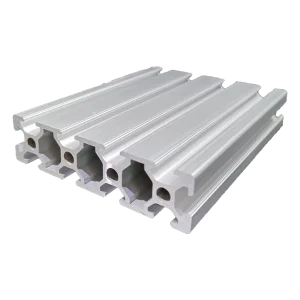
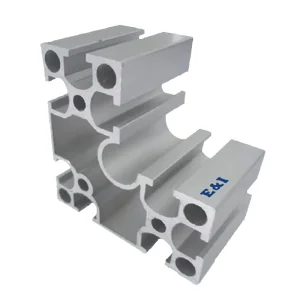
Heavy-duty, long-gauge profiles like the 80120 and 8080 series support automated conveyor lines. T-slot systems let engineers mount sensors, drive pulleys, and guides anywhere along the frame, simplifying line modifications.
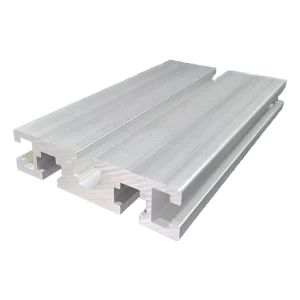
Using profiles like the ENI-6-3060C, we assemble customized flower racks, fish tank supports, and dynamic home concepts. Anodized surfaces protect the frames from moisture and wear in challenging environments.
Addressing typical engineering and purchasing queries about industrial aluminum framing systems.
A: Choice depends on structural loading and space constraints. 6mm slot profiles (such as 3030 series) are ideal for light shielding, lab benches, and display racks. 8mm slot profiles (such as 4040 or 4080 series) are the industry standard for machinery framing, conveying tracks, and worktables. 10mm slot profiles are reserved for heavy machinery stands, portal structures, and gantries experiencing high load forces.
A: Our industrial-grade profiles undergo controlled electrochemical anodization. They carry a standard coating thickness between 10μm and 15μm (micron), conforming to international standards. This provides strong resistance to scratching, mechanical wear, and atmospheric corrosion.
A: Yes. We offer comprehensive pre-processing and CNC customization services. We can cut profiles to specified lengths, tap end holes, mill counterbores, and supply all necessary gussets, brackets, and bolts. Frames can be shipped pre-assembled or flat-packed with assembly drawings for quick installation on-site.
A: Our profiles are extruded according to European and Asian standard dimensional designs. This makes them compatible with many global T-slot systems. If you have specific compatibility requirements, our technical team can verify cross-section profiles and slot configurations before tooling begins.
A: Working closely with the National Institute of Nonferrous Metals, we perform strict spectral analysis on each incoming batch of aluminum billets. We track chemical composition (silicon, magnesium, iron ratios) and run post-extrusion hardness testing (Webster hardness scale) to ensure profiles meet structural design requirements.
Browse more structural extrusions, including heavy-duty profiles and specialized household design series.