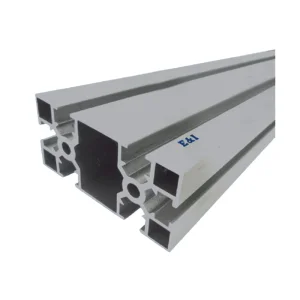
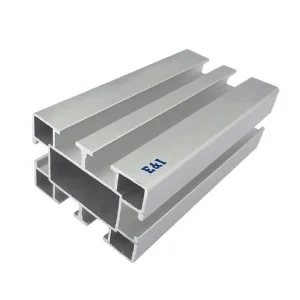
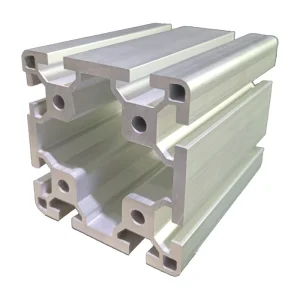
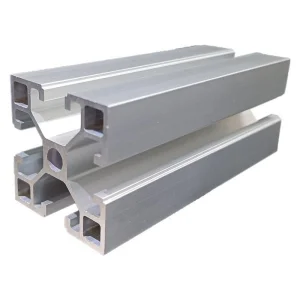
In the dynamic landscape of modern automation and industrial architecture, structural integrity is paramount. The Aluminium Profile Hinge represents the critical pivot node linking structural rigidity with motion versatility. These components are not merely passive connectors; they are engineered joints designed to distribute shear stresses, withstand high bending moments, and guarantee seamless angular displacement over millions of operational cycles.
This deep dive whitepaper explores how high-precision extrusion techniques combined with rigorous physical metallurgy turn standard aluminum sections into load-bearing solutions. From robotic protective enclaves to high-load assembly workbenches, selecting the proper grade of alloy, slot configuration, and surface treatment directly dictates system lifespan, safety parameters, and mechanical efficiency.
Adhering closely to the central business philosophies of "people-oriented design, quality-driven value creation, continuous technological innovation, and mutually beneficial win-win cooperation," Chengdu E&I Aluminum Industry Co., Ltd. is positioned at the absolute forefront of high-precision aluminum alloy engineering.
Through a strategic, long-standing academic-industry partnership with the National Institute of Nonferrous Metals, the company maintains a premier engineering R&D collective. Our structural profile solutions are utilized by Fortune 500 multinationals across the aerospace, automotive, medical, and semiconductor production sectors. We operate modern extrusion centers, automated anodizing networks, CNC pre-machining systems, and complete mechanical validation units to guarantee that every component leaves with zero defects.
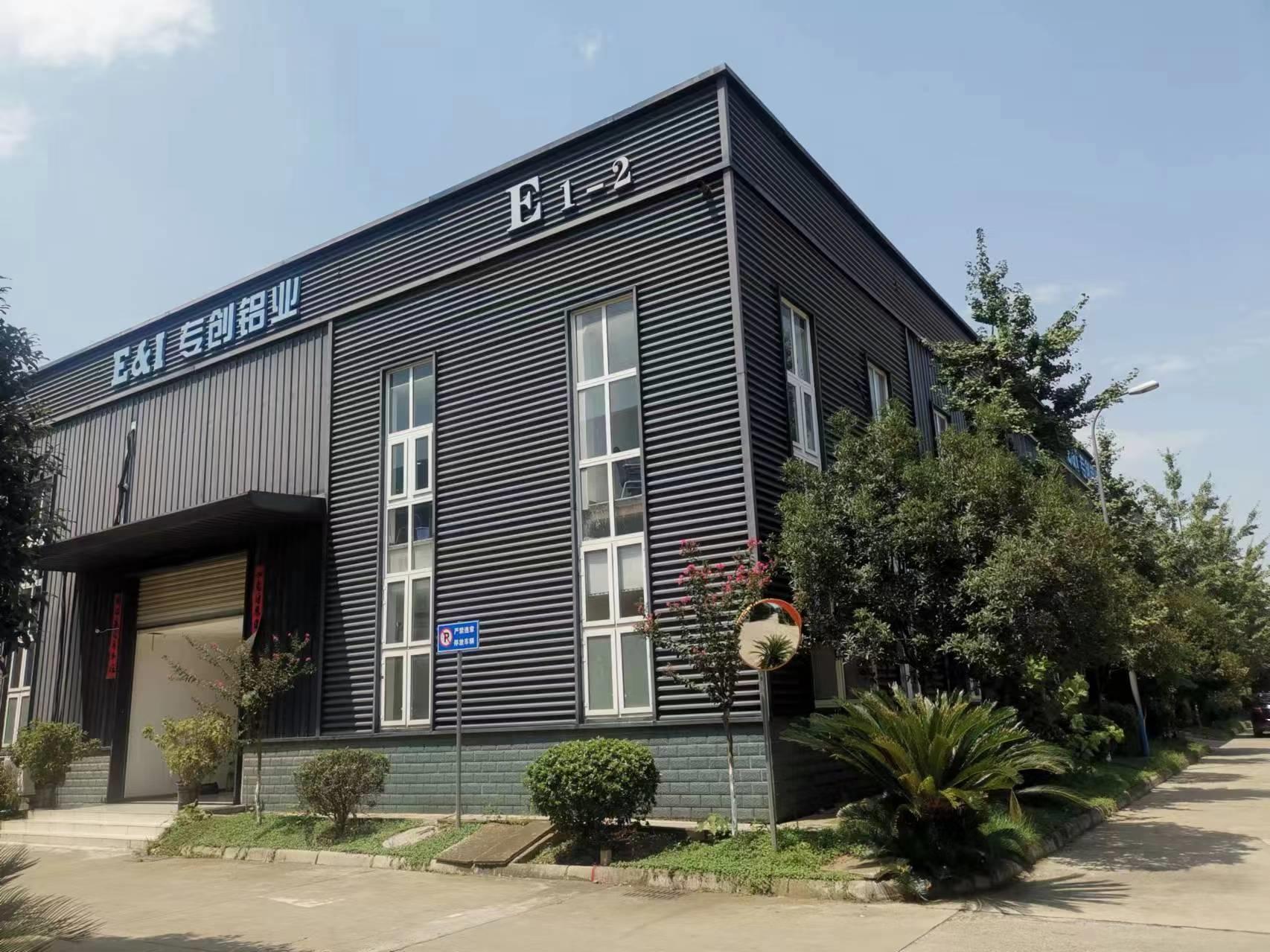
We value human resource safety and structural reliability. Industrial workbenches, machine enclosures, and protective screens must guard the operators flawlessly. We foster employee growth to elevate manufacturing standards.
We implement advanced geometric dimensioning and tolerancing (GD&T) to align profiles exactly. Delivering premium-value hinges ensures that automatic lines experience zero mechanical runtime failure.
By investing heavily in alloy micro-structural research and extrusion die optimization, we continue to engineer aluminum solutions that showcase superior yield strengths and torsional rigidity.
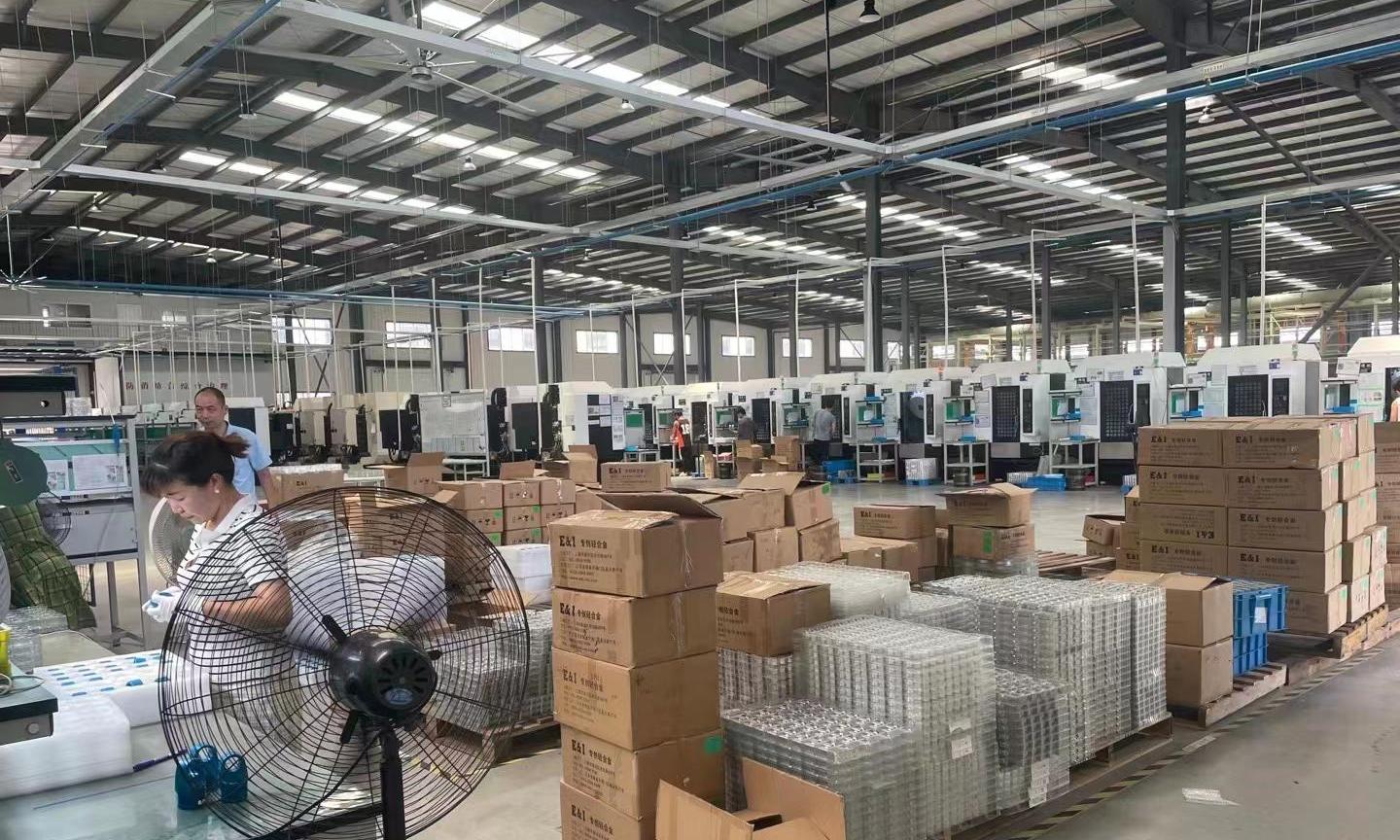
We aim to remain one of China’s top three companies in the light alloy and structural extrusion industry regarding customization flexibility, innovation capacity, and overall material technology.
By integrating local supply chains with high-level international specifications, we create lasting structural assets. From the initial custom die design to surface anodization, precision CNC drilling, and hardware fitting assembly, we achieve a streamlined process that minimizes sourcing times, ensures structural tolerances, and maximizes return on investment for international engineering operations.
Access to raw premium primary aluminum ingots allows E&I to maintain strict control over chemical compositions. Trace levels of iron, silicon, and magnesium are systematically managed to prevent profile brittleness, maximizing structural ductility.
Operating near highly concentrated regional logistics channels and raw material hubs allows us to slash production lead times. High-volume orders benefit from rapid billet heating, continuous extrusion runs, and integrated surface finishing lines.
Many suppliers only offer simple cut-to-length profiles. E&I features complete downstream fabrication, incorporating multi-axis CNC drilling, tapping, counterboring, and milling to deliver fully customized structural hinge mounting setups.
Aluminum 6063 billets are validated via spectrometer and uniformly heated to extrusion temperature ranges (typically 400°C to 480°C) to facilitate optimal alloy flow through custom dies.
Billets are forced through high-accuracy dies on our hydraulic presses. Controlled air/water quench rates ensure the mechanical properties corresponding to the specific T5 or T6 temper designations are fully realized.
Extrusions are stretched to remove inherent twists, then cut to length before entering artificial aging ovens, which precipitate hardening phases to achieve optimal tensile strengths.
Profiles undergo acid etching and electrochemical anodization (standard clear satin or black) to generate a protective, corrosion-resistant surface skin exceeding 10-15 microns in thickness.
For global enterprises, procuring profile hardware from overseas involves navigating complex structural codes, product safety directives, and quality assurances. Chengdu E&I Aluminum minimizes these supply hurdles by strictly adhering to regional and global industrial design standards:
Our structural extrusions conform strictly to the EN 12020-2 and EN 755-9 standards for precision profiles. We ensure straightness, wall thickness, twist limits, and slot spacing conform to tolerances as low as ±0.15mm. This guarantees that third-party metric and imperial T-slot accessories—such as sliding blocks, roll-in nuts, and modular hinges—fit seamlessly into our structures.
Every batch of aluminum shipped is backed by Mill Test Certificates (MTCs) and material traceability reports conforming to EN 10204 Type 3.1. Chemical composition tests and mechanical strain metrics are kept on file for at least 5 years. This provides procurement engineers in highly regulated fields (such as medical equipment manufacturing) with complete verification data.
Our anodizing, cleaning, and chemical conversion methods are fully compliant with RoHS and REACH regulations. We eliminate toxic heavy metals, hexavalent chromium compounds, and hazardous substances from our manufacturing processes, facilitating trouble-free custom clearing and environmental validation in European and North American markets.
To guarantee reliable operations, hinges and connector blocks undergo systematic load-deflection validation and mechanical cycle tests. This ensures our heavy-duty profiles (e.g., 8080W and 4545L series) withstand static loading stresses, continuous vibrations, and sudden impact dynamics without exhibiting fatigue fractures.
Understanding the target integration scenario is critical when selecting aluminum profile connectors and hinges. Industrial frames require hardware optimized for different mechanical demands. Here is how E&I products fit into specialized environments:
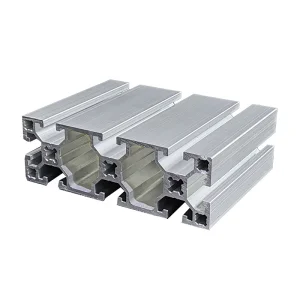
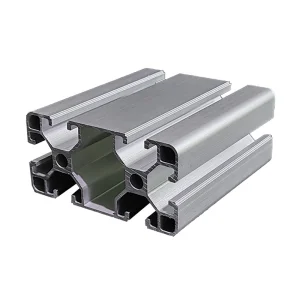
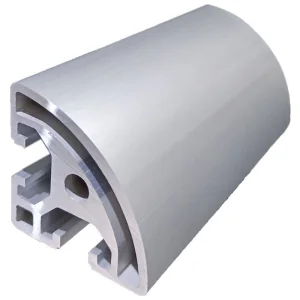
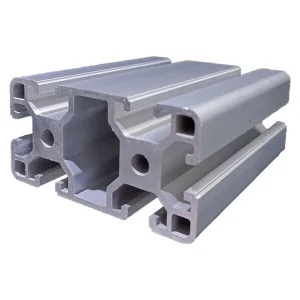
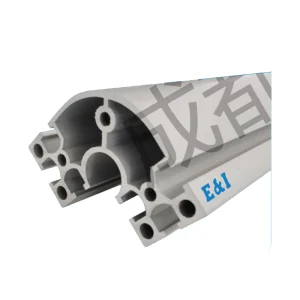
Industries like biotech and semiconductor manufacturing require dust-free environments. Our ENI-8-4080A and quarter-round E&I-8-4040R profiles feature uniform anodized coatings that do not particulate. Combined with flush-mount cleanroom hinges, they avoid dust accumulation and withstand aggressive sanitization agents.
Robotic arms and automated assembly cells require protective fencing. High-strength profiles like the ENI-6-6630R and E&I-8-4080I serve as reliable structural posts. Hinges used on access gates must withstand thousands of rapid opens and closes, integrating safety interlock switches without shifting alignment.
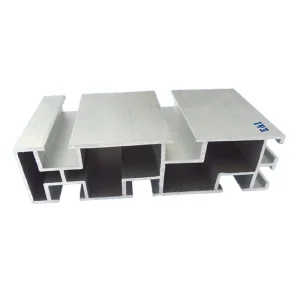
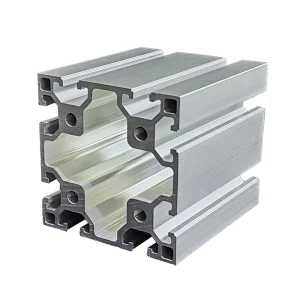
Outdoor solar trackers and industrial structural stairs are subject to harsh environmental conditions. The excellent bending resistance of ENI-8-8080F and ENI-8-35130, paired with heavy-duty corrosion-resistant hardware, ensures reliable operation under high wind loads, thermal cycles, and prolonged UV exposure.
Global procurement regulations increasingly prioritize low-carbon materials. The industrial aluminum profile market is shifting toward recycled and low-carbon extruded alloys. By refining our thermal processing parameters and optimizing material usage, Chengdu E&I Aluminum reduces the carbon footprint per kilogram of extruded profile, helping multinational partners achieve their corporate sustainability metrics.
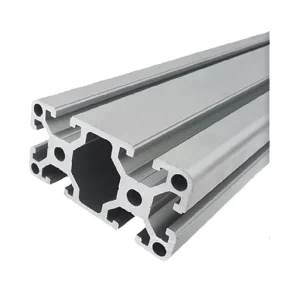
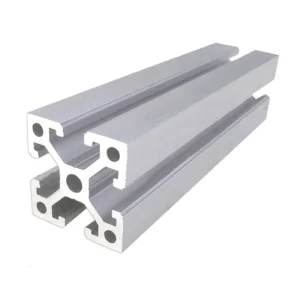
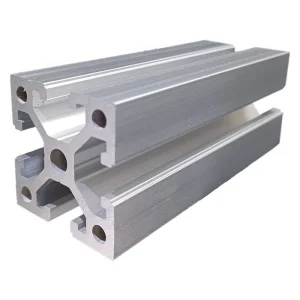
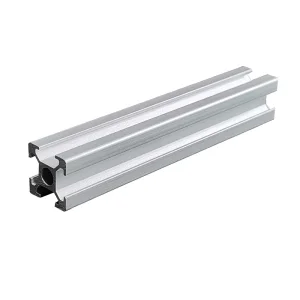
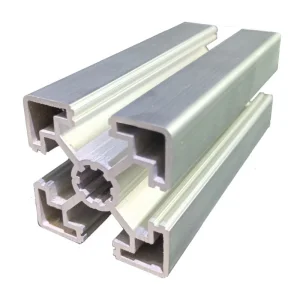
The slot width dictates both the structural loading capabilities and accessory compatibility. 6mm slots (such as our ENI-6-1515) are optimized for lightweight frames, protective displays, and small display enclosures. 8mm slots (such as the E&I-8-4040 series) are the industrial standard for structural workbenches, protective machine guarding, and automation frames. 10mm slots (such as the E&I-10-4545L) are reserved for heavy-duty structural frames subjected to high torque loads and extreme bending forces.
6063-T6 undergoes artificial aging to achieve higher yield and tensile strength limits compared to 6063-T5. T6 temper profiles typically exhibit a tensile strength of at least 220 MPa and yield strength of 170 MPa, whereas T5 profiles show around 150 MPa and 110 MPa respectively. For load-bearing hinges and critical structural components, T6 temper provides a greater safety margin against permanent plastic deformation.
Anodization produces a hard ceramic layer (aluminum oxide) on the profile surface. When fastening metal hinges to anodized slots, an anodization thickness of 12-15 microns acts as a barrier that prevents direct metal-to-metal contact, drastically reducing the risk of thread galling. For dynamic joints, using plastic sleeve bearings or isolating washers prevents direct contact between the hinge and the profile, ensuring smooth pivot action.
Bending resistance is primarily determined by the profile's cross-sectional shape, specifically its Moment of Inertia (Ix, Iy). Heavy profiles like the ENI-8-8080F feature thick outer walls and robust internal webbing, which concentrate material away from the neutral axis. This design increases the moment of inertia, minimizing deflection when the profile is subjected to high point-loads or cantilever forces.
Yes. We provide comprehensive downstream CNC fabrication services. This includes precision cutting, custom milling, drilling mounting holes, counterboring for socket head screws, and tapping profile ends. Supplying pre-machined profiles and matching hinges simplifies assembly for our international clients and reduces on-site installation costs.