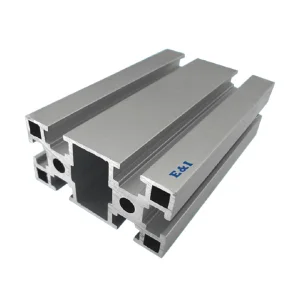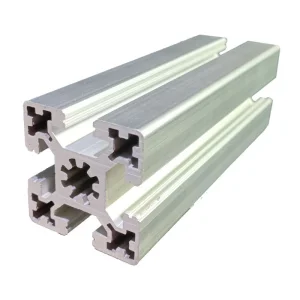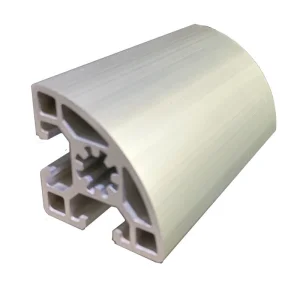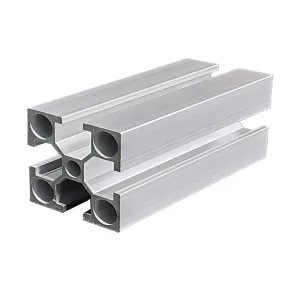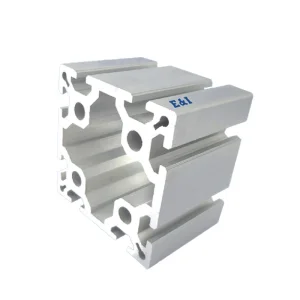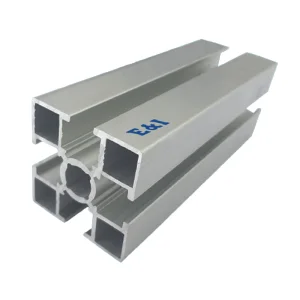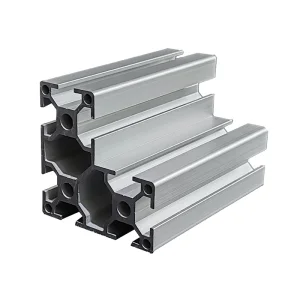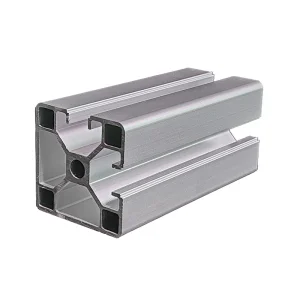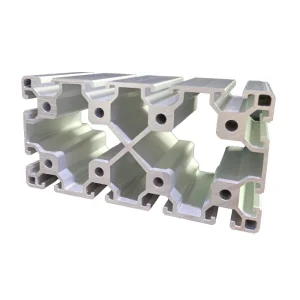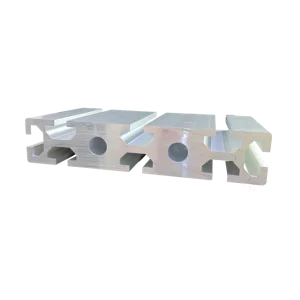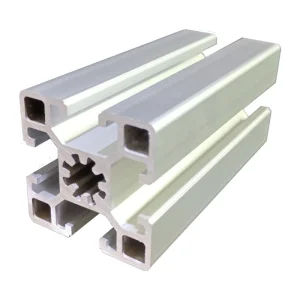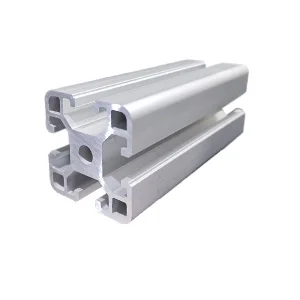
Chengdu E&I Aluminum Industry Co., Ltd., in line with the business philosophy of "people-oriented, quality value, technological innovation, and win-win cooperation", is dedicated to the research and development and manufacturing of aluminum alloy products with high difficulty, high precision and high requirements.
The company relies on The National Institute of Nonferrous Metals, drawing upon a professional aluminum alloy technology research and development team in China's light alloy industry. This collaborative integration enables E&I to provide global customers with holistic, engineered solutions for aluminum alloy products such as profiles, castings, and forgings.
Advanced production lines and comprehensive testing equipment guarantee rigorous product quality. Excellent professional services create value-for-money commercial value for customers, making us a strong strategic partner in aluminum alloy fabrication. Our main customers include Fortune 500 companies in the automotive and aerospace industries, who have widely praised our performance over many years.
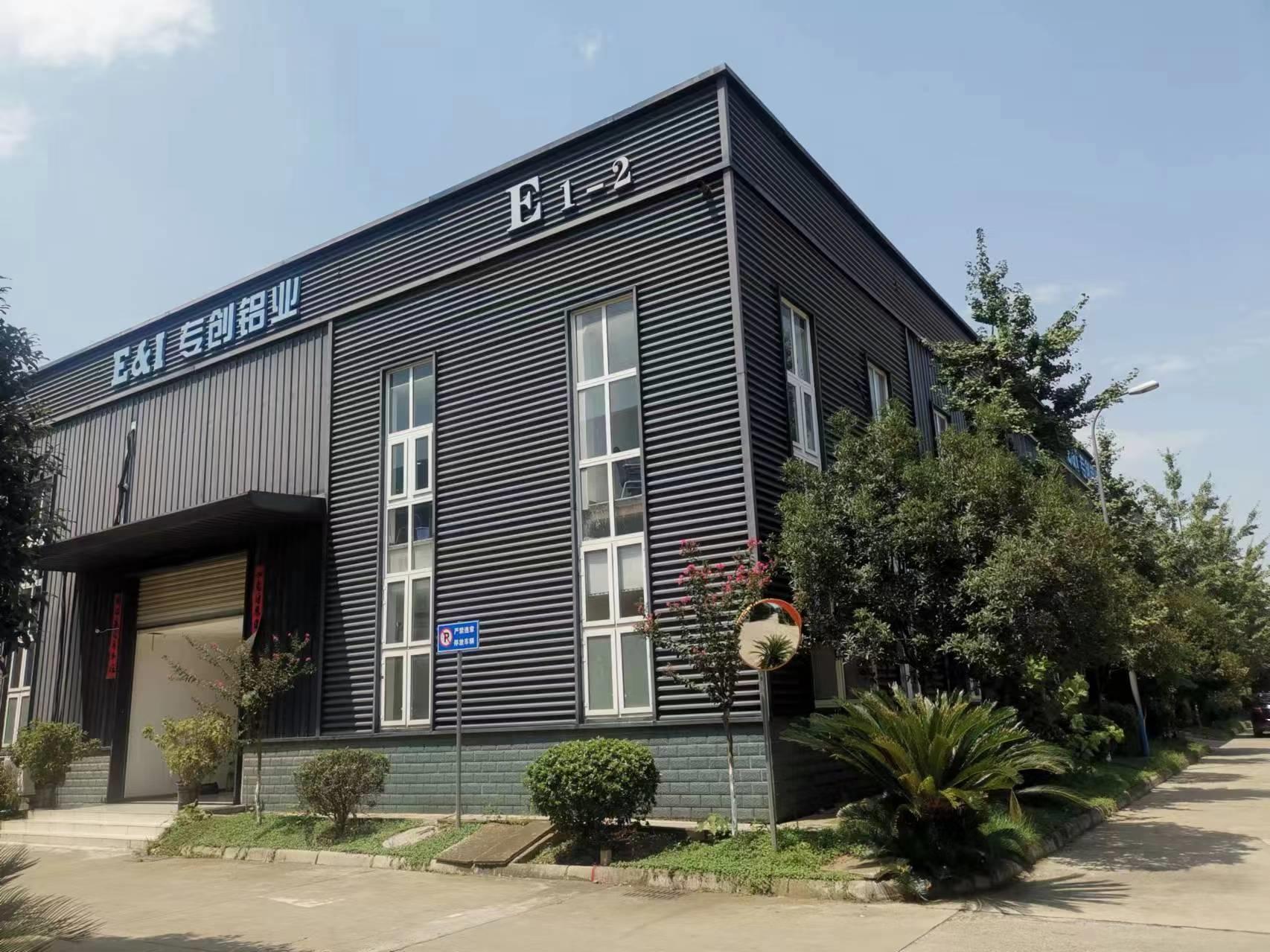
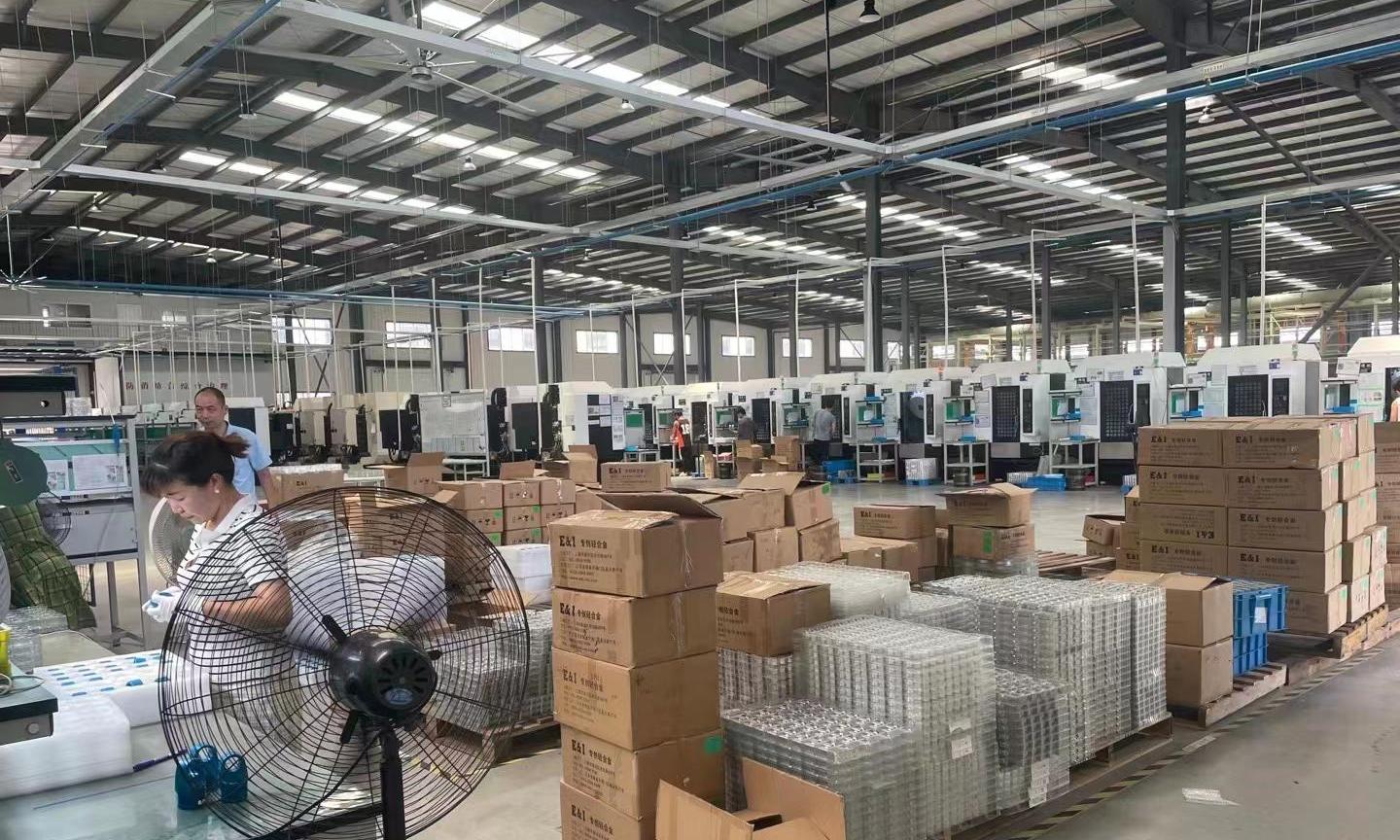
Strive to become one of the top three companies in China's aluminum alloy industry in terms of product competitiveness, innovation ability, and technical strength. We provide customers with products and services of superior value, enabling shareholders, employees, partners, and society to achieve mutual development.
Our core capabilities include structural design, aluminum profile extrusion production, and automatic anodizing/spraying lines. We provide comprehensive design and installation services for:
The company regards employees as wealth, understands their pursuit, provides them with better development space and competitive salary, and develops together.
Provide customers with outstanding products and services, and create more value for customers. Extrusion conforms to high-precision requirements, featuring corrosion resistance, easy accessory integration, and shock resistance.
Continuing technology research and development to maintain lead positions. We focus on product innovation, technological innovation, and management coordination to build core systemic competitiveness.
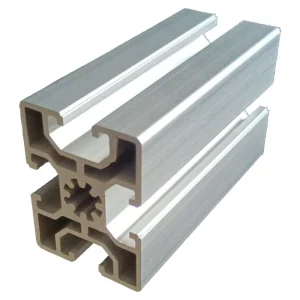
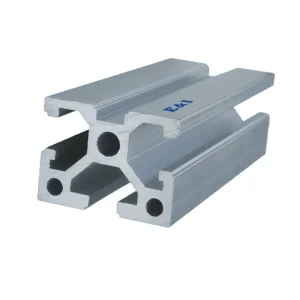
The 20x20 mm structural aluminum extrusion (often referred to as the 2020 profile) is the fundamental building block for lightweight framing, automation enclosures, and laboratory instrumentation. To achieve optimal performance under static and dynamic loads, engineers must evaluate the precise physical geometry, alloy composition, and mechanical properties.
Most standard 20x20 profiles are extruded using 6063-T5 aluminum alloy. This alloy provides an excellent balance of surface finish quality, corrosion resistance, and structural strength. For environments subject to extreme tensile stresses or high structural vibration, 6061-T6 is recommended due to its higher yield strength (typically 240 MPa compared to 145 MPa for 6063-T5).
Anodization plays a key role in preventing wear. Chengdu E&I offers industrial anodizing with film thicknesses ranging from Class 10 (10-12µm) to Class 15 (15µm+), ensuring long-term resistance in mildly acidic or humid industrial microclimates.
When designing frames using 20x20 profiles, deflection ($f$) under a point load ($F$) is calculated using the Euler-Bernoulli beam equation:
Where:
• F = Applied force (Newtons)
• L = Span length (mm)
• E = Modulus of elasticity (approx. 70,000 N/mm² for aluminium)
• I = Moment of Inertia (mm⁴) - typically around $0.72 \times 10^4$ mm⁴ for a standard 20x20 profile.
| Property Description | Metric Unit (6063-T5) | Metric Unit (6061-T6) | Engineering Impact |
|---|---|---|---|
| Tensile Strength (Rm) | ≥ 160 MPa | ≥ 290 MPa | Maximum stress before ultimate structural failure |
| Yield Strength (Rp0.2) | ≥ 110 MPa | ≥ 240 MPa | Limit of elastic deformation (permanent bending threshold) |
| Hardness (Vickers) | ≥ 60 HV | ≥ 95 HV | Resistance to local indentation and fastener scarring |
| Anodizing Film Thickness | 10 - 15 μm | 12 - 20 μm | Corrosion isolation and surface insulation protection |
Modern structural extrusion manufacturing requires more than simple metal shaping; it demands rigorous smart factory operations. Chengdu E&I integrates automated raw billet heating, smart extrusion velocity tracking, and precise automated run-out tables.
Our computerized presses maintain consistent thermal profiles during the extrusion cycle. This minimizes structural variations along the profile's length, ensuring consistent dimensions from the first meter to the last.
Every melt batch undergoes optical emission spectrometry before casting. This ensures alloy elements (Silicon, Magnesium, Iron) fall strictly within global standards (ASTM B221, EN 755).
We leverage automated storage and retrieval systems to minimize packaging damage, ensuring profiles remain scratch-free during pre-delivery stages.
For precision mechanical assemblies like linear actuators and CNC guide rails, standard commercial tolerances are insufficient. Our factory adheres to the EN 755-9 standard, regulating twist tolerances to within ≤ 0.5 mm per meter and straightness tolerances down to 0.3 mm per meter. This precision minimizes assembly alignment adjustments and reduces system wear on linear bearings.
Navigating international procurement requires close attention to design details, material certifications, and chemical compliance. When requesting quotes for 20x20 aluminum profiles from China, engineers and sourcing managers should clarify the following technical details:
Aluminum profiles are susceptible to surface damage during sea and air transit. Chengdu E&I protects shipments by wrapping individual profiles in protective PE film, boxing them in heavy-duty cardboard, and securing the boxes in reinforced wooden crates. We coordinate closely with freight forwarders to optimize container volume, minimizing shipping costs per metric ton.
The manufacturing landscape is shifting toward low-carbon materials and smart components. E&I's R&D team, working in partnership with the National Institute of Nonferrous Metals, is actively developing next-generation extrusion technologies.
To support global sustainability goals, we are expanding our use of recycled aluminum billet material without sacrificing tensile strength. Using clean green electricity for smelting helps reduce the carbon footprint of each extrusion.
As automation systems become more connected, structural frames are evolving to do more than hold weight. We are developing profiles with integrated wiring channels and built-in slots for mounting sensors, limit switches, and LED indicator strips.
Advanced machinery requires increasingly precise profiles. Our micro-extrusion lines are capable of producing wall thicknesses down to 1.0 mm with precision tolerances, opening up new design possibilities for medical devices and laboratory electronics.