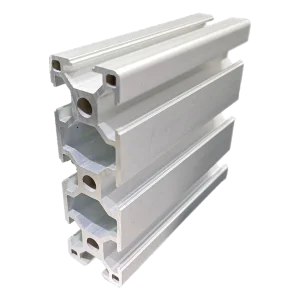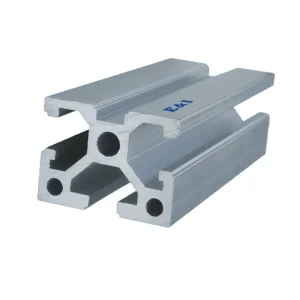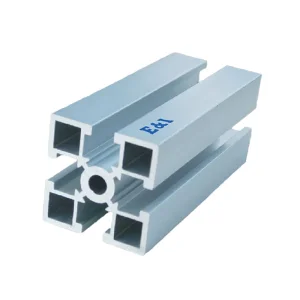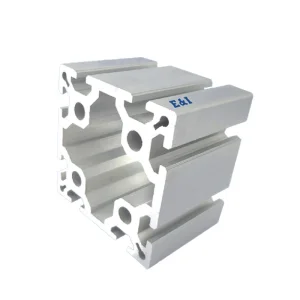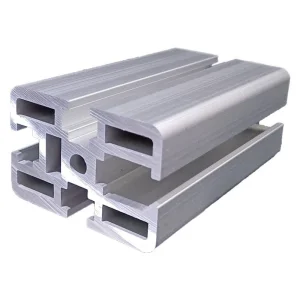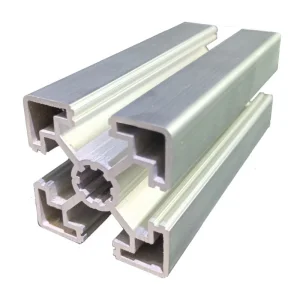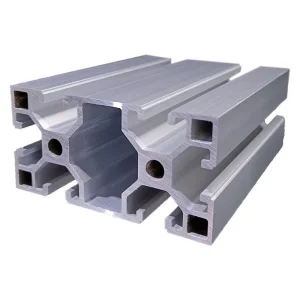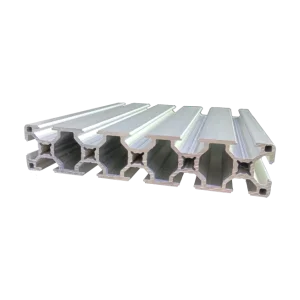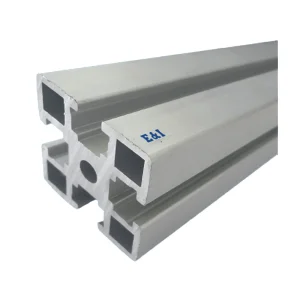
Explore the initial cohort of precision-engineered industrial profiles manufactured to global structural standards. This selection highlights heavy-duty cross sections, structural framing profiles, and custom assembly line components designed for specialized automation infrastructure.
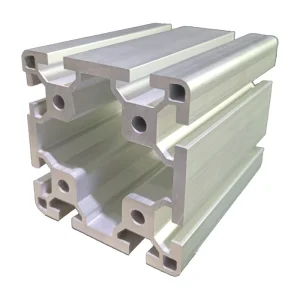
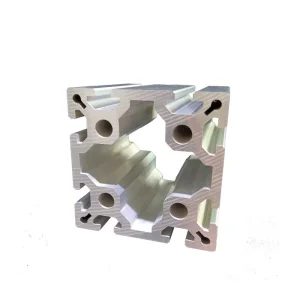
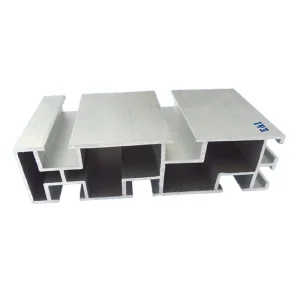
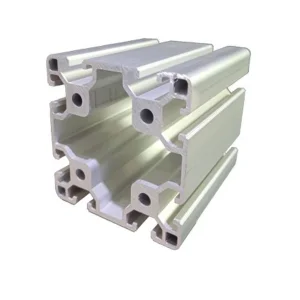
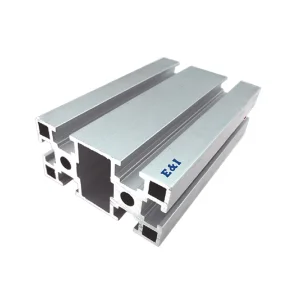
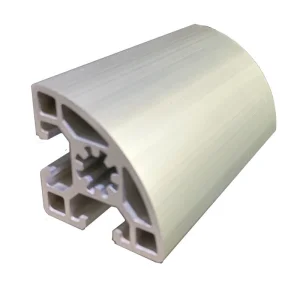
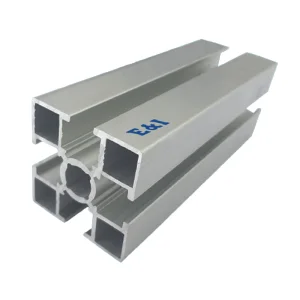
Within modern industrial assembly, mechanical structure fabrication has shifted away from welded steel frames toward high-precision, modular aluminum extrusion technologies. The 40 x 40 mm aluminum profile has emerged as a fundamental architectural standard, striking a reliable balance between structural rigidity, moment of inertia, and light weight. This standard supports structural platforms, automation enclosures, automated guided vehicle (AGV) chassis, and dynamic robotic frames.
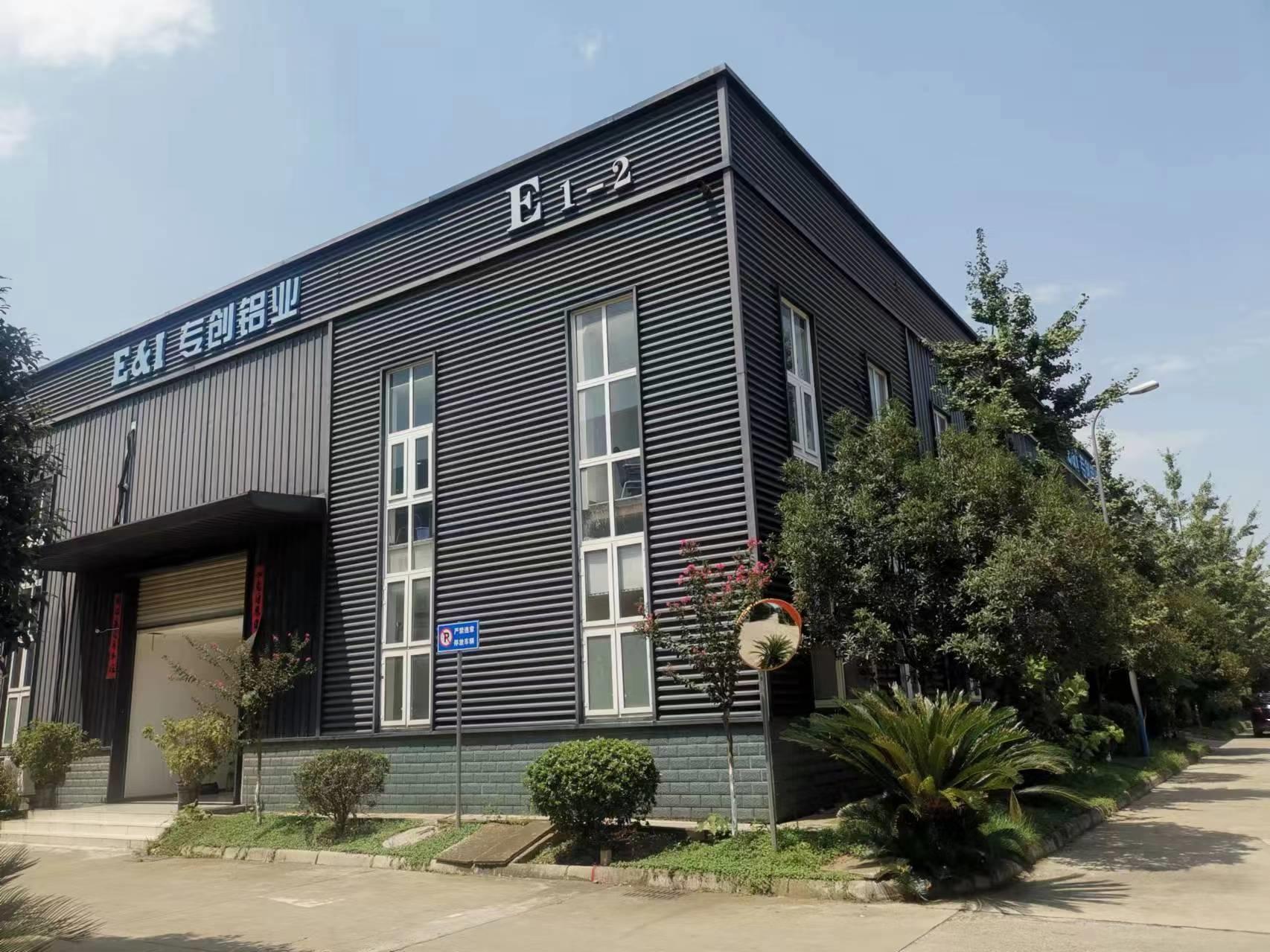
Chengdu E&I Aluminum Industry Co., Ltd. develops light alloy products designed for high difficulty, high precision, and demanding requirements. Building on technical expertise developed through collaborations with the National Institute of Nonferrous Metals, E&I operates as a specialized technical partner for industries requiring reliable alloy engineering, including Fortune Global 500 automotive manufacturing and commercial aviation sectors.
"By integrating alloy metallurgy with precision extrusion technologies, we deliver custom modular structural systems that meet strict international mechanical standards."
The structural reliability of 40x40 aluminum extrusions depends on chemical composition controls and structural geometry. At E&I Aluminum Industry, profiles are extruded from premium AL-Mg-Si alloys (typically 6063-T5, 6063-T6, and 6061-T6), selected for tensile properties, heat-treatment response, and surface-finishing capabilities.
Our metallurgy processes manage silicon (0.2% - 0.6%) and magnesium (0.45% - 0.9%) ranges to prevent premature failure, optimize tensile strength, and retain ductile properties.
Featuring a standard 8mm or 10mm slot width, E&I profiles are engineered to handle high torque, reducing structural loosening from machinery vibration.
The cross-sectional distribution of metal is calculated to maximize bending resistance, reducing material weight while maintaining load capability.
| Profile Specification (40x40 Series) | Alloy Temper | Mass per Meter (kg/m) | Moment of Inertia Ix (cm⁴) | Moment of Inertia Iy (cm⁴) | Tensile Strength (MPa) |
|---|---|---|---|---|---|
| ENI-8-4040LB (Lightweight Duty) | 6063-T5 | 1.25 | 9.12 | 9.12 | ≥ 180 |
| ENI-8-4040O (Standard / Medium Duty) | 6063-T5 | 1.52 | 11.45 | 11.45 | ≥ 195 |
| E&I-8-4040GE (Drawer/Workbench Heavy) | 6061-T6 | 1.85 | 14.20 | 14.20 | ≥ 265 |
| E&I-8-4060 (Semi-Heavy Framing) | 6063-T6 | 2.10 | 28.40 | 13.60 | ≥ 215 |
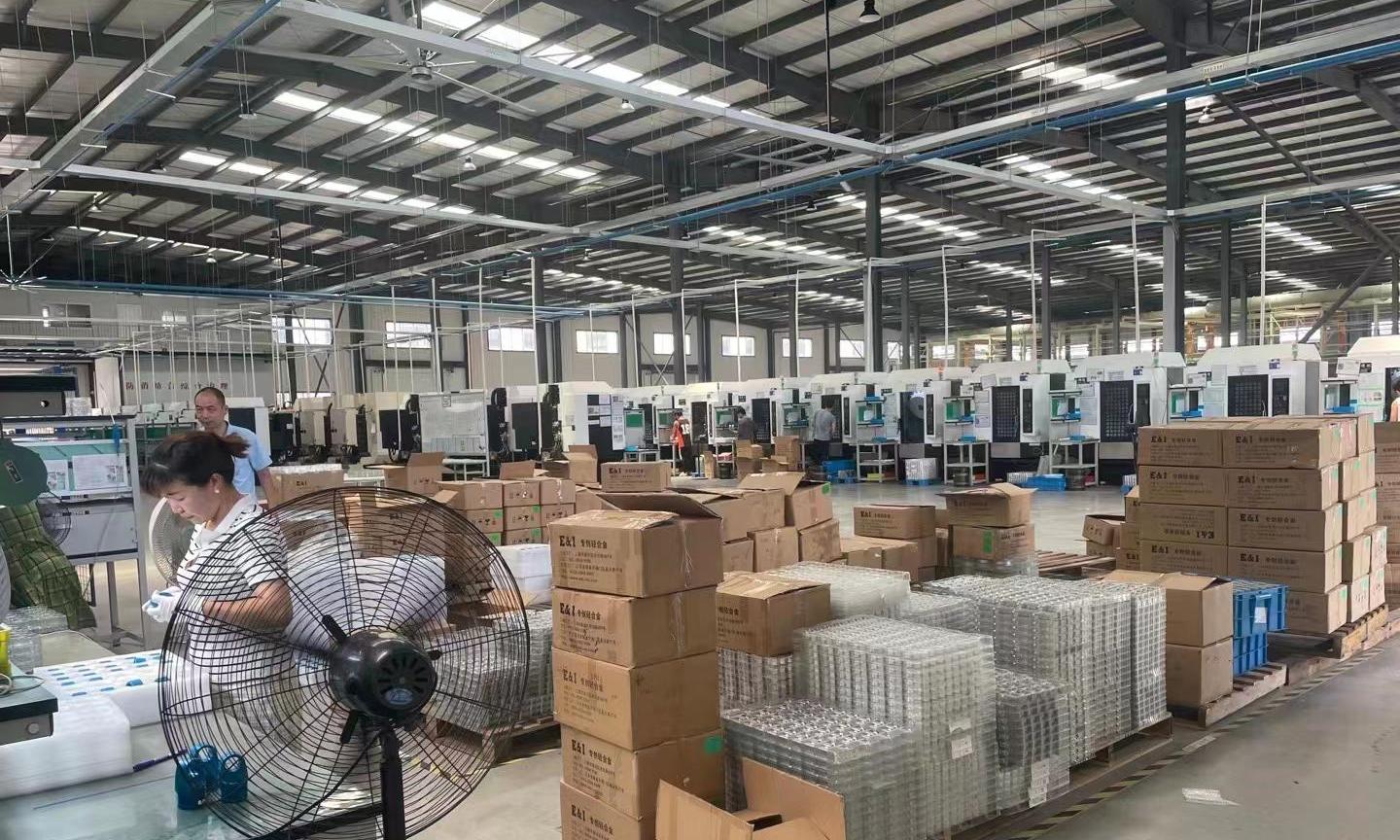
As a global source for structural aluminum, Chengdu E&I Aluminum Industry Co., Ltd. runs advanced manufacturing operations that support supply chain resilience. The company operates continuous extrusion presses, temperature-controlled cooling tables, and automated multi-stage aging ovens to ensure uniform mechanical properties across production runs.
By using low-carbon, clean-energy hydroelectric primary aluminum billets sourced from Western China, E&I controls material purity and limits the carbon footprint of its products. Fully automated anodizing and powder-coating systems deliver a clean finish, high corrosion resistance, and consistent surface appearance, meeting strict environmental and quality requirements for export markets.
Logistically, the Chengdu industrial zone connects directly to the China-Europe Railway Express corridor, providing structured overland transport routes directly to European logistics centers, bypassing maritime port disruptions and shortening transit times.
The adaptability of E&I’s 40x40 aluminum extrusion profiles allows them to serve as structural elements across diverse sectors. Industrial users leverage their modular characteristics to construct custom components for different applications:
Integrated with wire mesh, polycarbonate, or soundproofing panels, 40x40 profiles make robust safety guardrails around high-speed robotic cells, CNC machining areas, and assembly zones.
The ENI-8-4040GE drawer-type workbench and modular tables feature clean layouts, anti-vibration joints, and built-in tool runners, streamlining manual assembly configurations.
Cleanroom panels and HEPA filtration units mount directly onto clear-anodized 40x40 frameworks. The smooth, anodized finish prevents particle shedding and holds up to regular disinfection protocols.
In regional markets, E&I supports regional standards and integration requirements. From North American automation structures using fractional fastener conversions to European factories complying with EN ISO 14120 safety guarding protocols, our engineering team supplies custom-cut profiles and pre-drilled brackets tailored for direct local deployment.
As industrial automation demands lighter, stronger materials and more sustainable manufacturing processes, the technical roadmap for next-generation aluminum profiles centers on three core pillars:
Researching the addition of trace elements like scandium (Sc) and zirconium (Zr) to standard 6000-series alloys to improve grain structures, helping raw profiles reach higher yield strengths without losing fracture toughness.
Using up to 75% post-consumer scrap in our billet feed reduces energy consumption during primary melting, offering a low-carbon option for corporate clients targeting Scope 3 emissions reductions.
Integrating direct 3D STEP and SolidWorks data blocks allows design engineers to run structural finite element analysis (FEA) simulations before ordering, minimizing prototyping waste.
Operational safety demands structural integrity. Chengdu E&I enforces quality checking protocols throughout the production lifecycle. Standard mechanical verification processes include:
Compliance Standard Matrix: E&I products comply with European CE directives, RoHS environmental standards, and ISO 9001:2015 quality management procedures, allowing for drop-in compatibility with global mechanical assembly lines.
Explore the second cohort of our product catalog. These models provide solutions for complex, high-capacity machinery mounting, safety guarding, and custom frame assemblies. Click below to view individual structural performance and mechanical drawings.