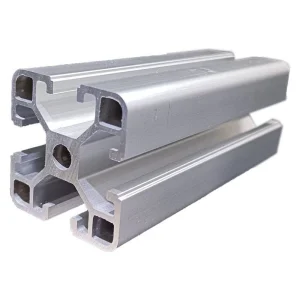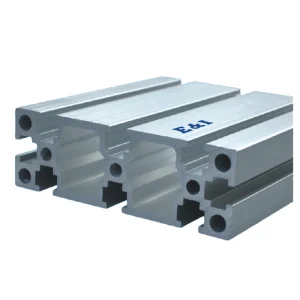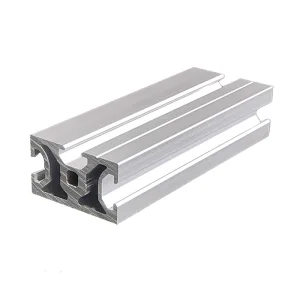
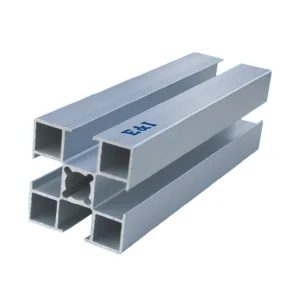
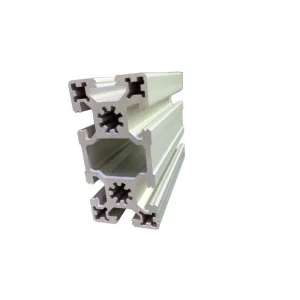
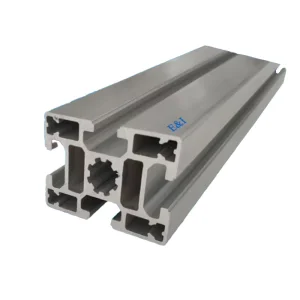
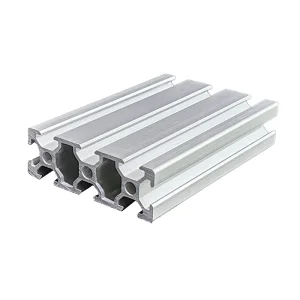
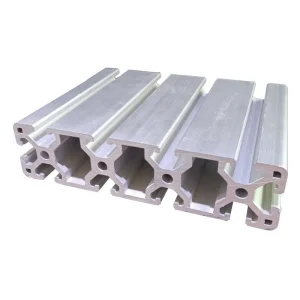
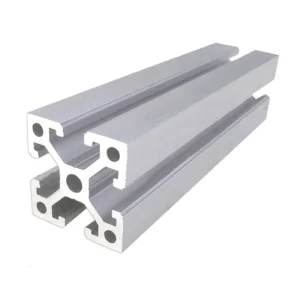
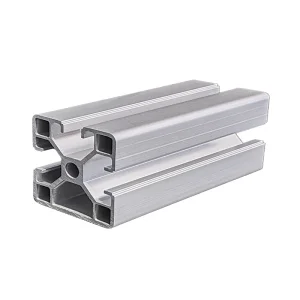
Chengdu E&I Aluminum Industry Co., Ltd. stands as a premier manufacturer in the high-precision structural framing sector. Operating under the structural business philosophy of "people-oriented, quality value, technological innovation, and win-win cooperation," our company is dedicated to the research, development, and high-precision manufacturing of complex structural profiles with extreme requirements.
"By partnering with the National Institute of Nonferrous Metals, E&I integrates high-level technological expertise into our extrusion processes. Our R&D team focuses on formulating structural alloys that exceed standard yield strengths, providing strategic solutions for automotive giants, aerospace partners, and automation systems integrators worldwide."
Equipped with custom extrusion dies and automated post-processing facilities, we manage the entire manufacturing cycle. This comprehensive control enables us to deliver aluminum structural frames, workspace solutions, modular machine fences, automated assembly lines, cleanrooms, and mounting supports with precise dimensional compliance.
Industrial structural frames require precise material selection to meet strength, environmental, and thermal requirements. Chengdu E&I Aluminum Industry Co., Ltd. designs and manufactures solutions across multiple industries:
High-speed robotic cells demand framing with structural rigidity to absorb kinetic energy from dynamic movements. We supply structural profiles like E&I-10-4590W and E&I-8-4040T for robot enclosures, sensor mounts, and heavy conveyor frames.
In dust-sensitive environments, micro-cavities can accumulate particles. Our single-side sealed profiles (e.g., ENI-8-4080EL-T and ENI-6-2035EE) offer flat, smooth surfaces that reduce contamination and simplify wipe-downs in clean sheds and lab benches.
Outdoor applications require high resistance to wind loads and corrosion. Profiles like ENI-8-8080A feature structural properties suitable for heavy load-bearing frames, solar trackers, and structural support systems.
E&I's facility in Chengdu utilizes integrated processes to ensure consistent supply chain management. By locating extrusion, die making, precision CNC milling, and surface treatments on a single site, we reduce production bottlenecks and control quality variables directly.
Our extrusion lines handle high-precision specifications, control quench cycles, and ensure temper consistency (specifically T5 and T6). In-house surface treatments include anodizing (natural and black, adhering to strict thickness specifications) and powder coating to protect profiles from chemical exposure and corrosion.
With direct rail access through the Chengdu-Europe Express, we provide reliable shipping timelines to the European Union and North America. This logistical connectivity helps our global partners manage inventory timelines and coordinate build cycles effectively.
Selecting the appropriate aluminum profile requires calculating the deflection under load to ensure structural safety. Engineers should utilize the standard deflection formula for a profile supported at both ends under a concentrated central load:
Where:
For applications with high dynamic stress, we suggest profiles like the ENI-8-8080A, which offers a high moment of inertia to resist bending. In contrast, for lightweight applications such as workstation dividers or brackets, profiles like the E&I-8-5050L or ENI-6-3090A provide an efficient balance of weight and structural capacity.
E&I implements strict testing protocols to verify that our shipments meet global engineering and environmental standards:
We analyze every billet batch to confirm that chemical element ratios of Silicon (Si), Magnesium (Mg), and Iron (Fe) meet EN 573-3 composition specifications.
Our anodizing processes conform to ISO 7599, verifying that minimum oxide film thicknesses protect profiles in industrial environments.
We monitor extrusion dimensions to maintain tolerances within the limits defined by EN 755-9, ensuring compatibility with standard hardware.
E&I is preparing for future industry changes through targeted R&D in two main areas:
To meet carbon reduction targets, we are developing techniques to incorporate recycled post-consumer aluminum into our structural alloys. The goal is to lower embodied carbon while maintaining the mechanical properties of primary alloys.
We are exploring design profiles that include dedicated internal channels for wiring, routing, and sensor housing. This integration supports smart factory layouts by protecting communication lines within the framing structure.
These designations indicate the width of the T-slot channel in millimeters. Slot 6 is typically used for light-duty frames, Slot 8 for medium-duty structures like machine guards and workbenches (e.g., 4040 profiles), and Slot 10 for heavy industrial applications requiring high load capacities (e.g., 4590 or 8080 profiles).
Our production process includes post-extrusion tension-stretch straightening. We measure profiles to ensure twist and flatness deviate less than 0.3mm per meter, which helps prevent assembly issues on long production runs.
We primarily use 6063-T5, which provides a balance of structural strength and a clean finish after anodizing. For applications requiring higher tensile and yield strength, we can produce profiles using 6061-T6 on demand.
Yes. Our machine shop provides CNC cutting, drilling, tapping, and milling. We can deliver flat-packed, pre-machined kits labeled for direct assembly on-site.
Our standard clear anodizing thickness is 10 to 15 microns. For harsh chemical environments or outdoor installations, we can increase this to over 20 microns on request.
Our quality management system conducts spectrometer testing on alloy composition, verifies hardness values, and measures dimensions against target drawings. We provide inspection reports before shipment.
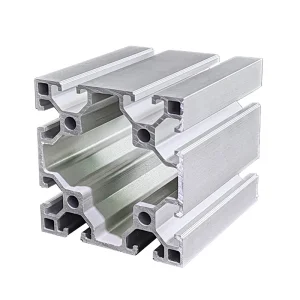
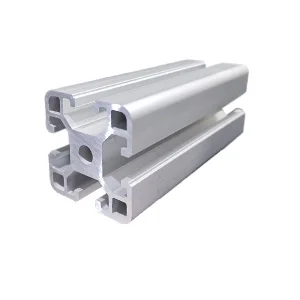
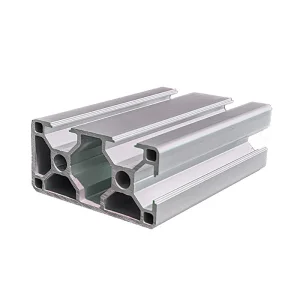
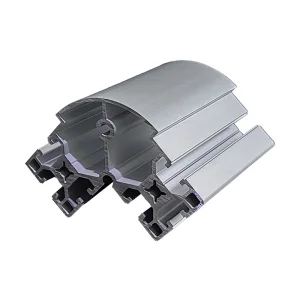
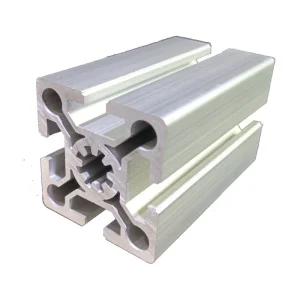
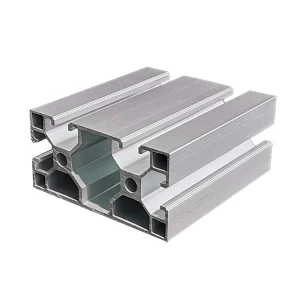
We offer design engineering and manufacturing support, transitioning your project concepts into structured physical systems. By providing structural design, precision CNC machining, and anodizing on a single site, E&I simplifies sourcing, reduces dimensional errors, and delivers ready-to-assemble solutions to keep your projects on schedule.
To begin your project, please provide your CAD drawings, dimensional specifications, and application parameters (including load profiles, environmental conditions, and finish requirements). This information helps our engineering team analyze static calculations, recommend profile options, and confirm that the final components align with your target tolerances and performance needs.