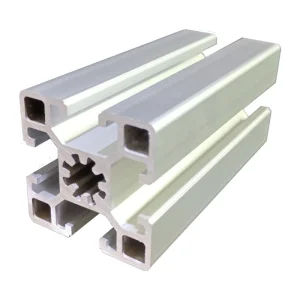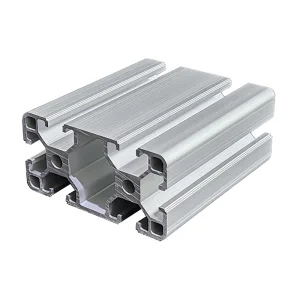
EI Aluminium Profile 15 Product & Service

Precision Engineering, Advanced Metallurgy, and Global Supply Chain Solutions for Heavy-Duty and Automated Industrial Applications

Industrial Whitepaper: Structural Aluminum Framing Systems

In the modern manufacturing landscape, the shift from welded steel structures to modular structural aluminum profiles represents a significant advancement in industrial design. Demands for flexible manufacturing, rapid assembly, and corrosion-resistant systems have positioned extruded profiles at the core of industrial automation, automotive assembly, cleanrooms, and aerospace infrastructure. Chengdu E&I Aluminum Industry Co., Ltd. stands at the forefront of this shift, offering precision-engineered structural elements that meet global testing standards and load-bearing requirements.
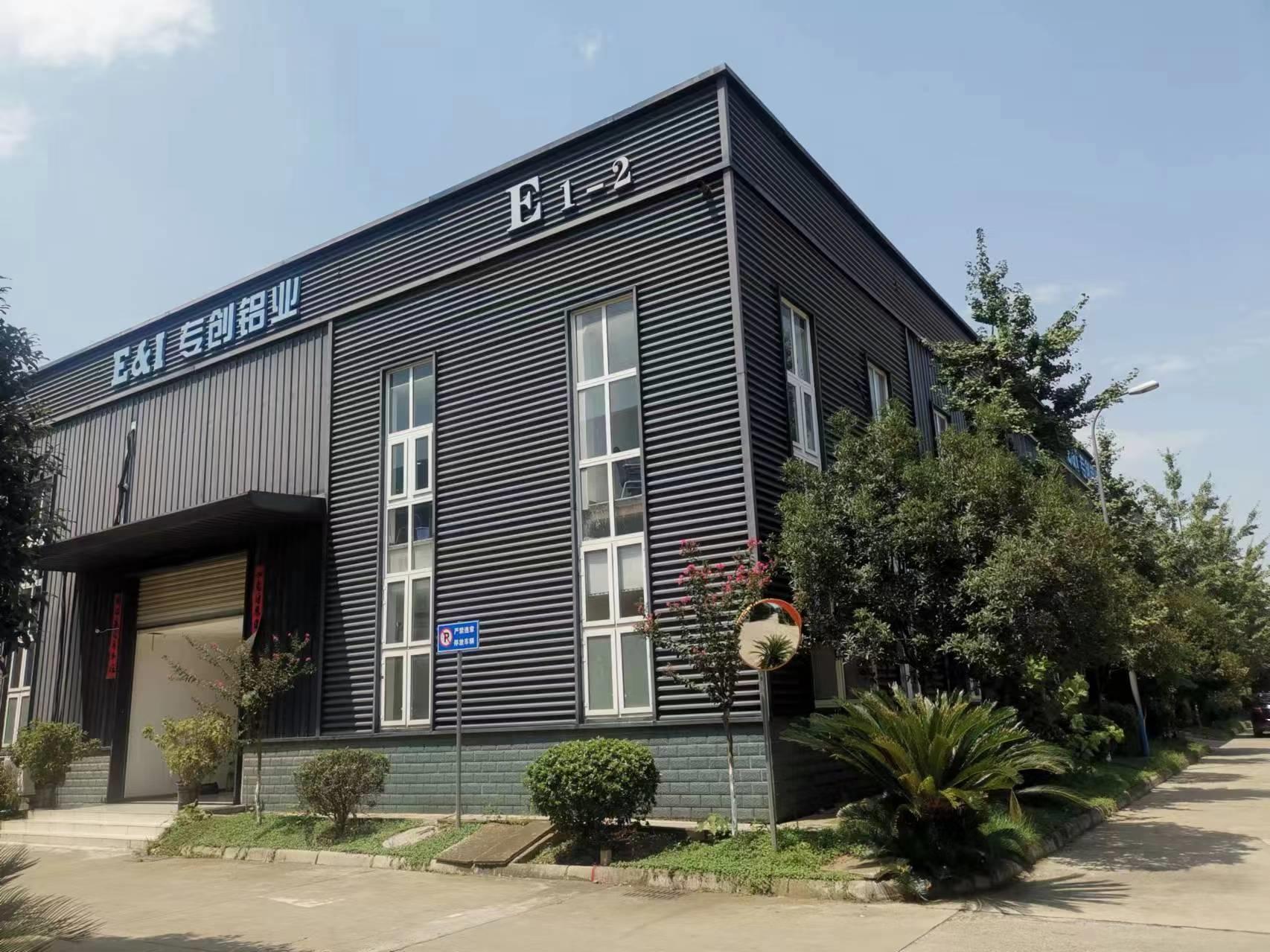
Chengdu E&I Aluminum Plant Facility

Chengdu E&I Aluminum Industry Co., Ltd.

Aligned with our core philosophy of "people-oriented, quality value, technological innovation, and win-win cooperation", we focus on researching and manufacturing high-precision, high-difficulty aluminum alloy profiles. Our technical capacity is supported by collaboration with the National Institute of Nonferrous Metals, a leading light-alloy research institution in China.

This partnership enables us to offer integrated solutions encompassing customized profiles, precision castings, and high-strength forgings to meet the specifications of global industries, including automotive manufacturers and aerospace enterprises.

Expert Insights on Alloy Metallurgy: The performance of structural framing systems depends heavily on the chemical composition and thermal treatment of the alloy. The standard 6063-T5 alloy offers a balanced combination of tensile strength, surface finish, and corrosion resistance. For high-stress applications, E&I utilizes 6061-T6 temper profiles to ensure load-bearing stability under dynamic and static forces.

6063-T5 Standard Grade Alloy
Top 3 Industry Innovation Rank
100% Precision Tolerances Met
500+ Global Partners Served

Comprehensive Corporate Profile

Chengdu E&I Aluminum Industry Co., Ltd. provides design, extrusion, anodizing, and powder-coating services from its integrated production lines. We supply high-precision structural frames, safety guards, workbenches, conveyors, cleanrooms, and solar mounting brackets directly to global markets. Every batch conforms to national and international standards, featuring consistent anodization thickness, straightness tolerances, and secure connections designed to resist loosening and vibration.
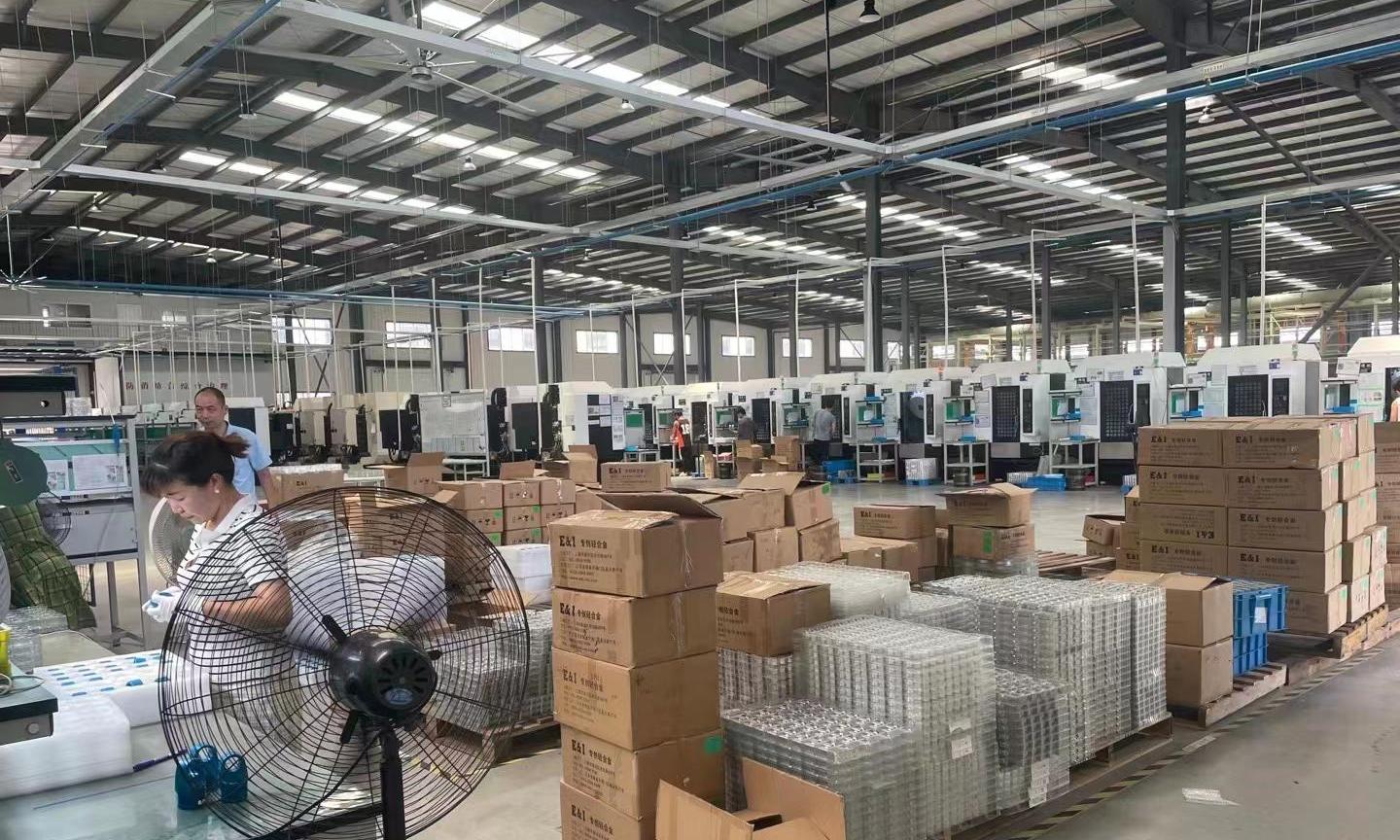
E&I Aluminum Extrusion Equipment

Vision & Technical Mission

Our long-term goal is to rank among the top three Chinese suppliers of structural aluminum in terms of engineering innovation and technical competence. By investing in metallurgical research and extrusion technologies, we deliver functional value to shareholders, industrial integrators, and engineering partners alike.

Values Driven by Engineering Excellence

People-Oriented Focus

We invest in continuous training and provide competitive compensation packages, aligning our workforce's professional growth with our technical execution standards.

Quality & Structural Integrity

Our Quality Management Systems (QMS) track every batch from ingot melting and chemical adjustments to final extrusion, ensuring cross-sectional accuracy.

Continuous Technical Innovation

We invest 5% of our annual revenue into extrusion die optimization, structural testing, and custom cross-sections to maintain a high-value product line.

Win-Win Global Partnerships

We work closely with global system integrators to reduce assembly cycle times, simplify supply chains, and lower total project costs.

Strategic Insights: Supply Chain, Localization & Global Compliance

The Advantages of Chengdu's Raw Material and Manufacturing Ecosystem

Sourcing structural aluminum from Chengdu E&I Aluminum Industry Co., Ltd. provides distinct geographic and supply chain benefits. Chengdu serves as a major hub for China's nonferrous metal and aerospace industries, providing stable access to high-purity primary aluminum ingots. Our facility relies on direct, logistics-optimized supply corridors, reducing inbound transport costs. By integrating alloy formulation, billet casting, die development, and extrusion at a single site, we minimize energy consumption and maintain control over chemical purity and grain structure.

Global Technical Standard Compliance

Operating in international markets requires adherence to diverse engineering and safety specifications. E&I profiles are manufactured in compliance with major global systems:

  • European Standard EN 755 & EN 12020-2: Governs mechanical properties, dimensional tolerances, and surface qualities for precision extrusions.
  • ASTM B221: Aligns chemical compositions and mechanical tempers with North American standard specifications for aluminum-alloy extruded bars, rods, and profiles.
  • RoHS & REACH Compliance: Guarantees that all post-extrusion surface treatments (anodizing, electrophoretic coatings, and powder coatings) are free from lead, mercury, cadmium, and hexavalent chromium.

Application Scenarios & Real-World Deployments

E&I aluminum framing components are utilized across several key industrial environments:

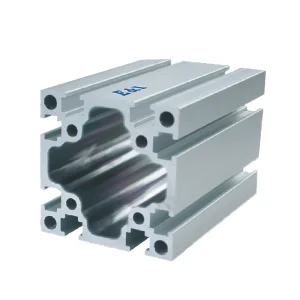
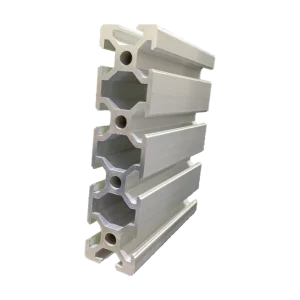
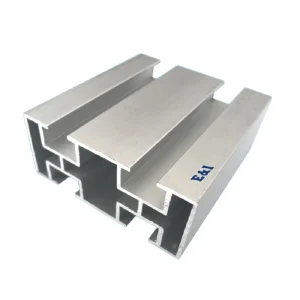
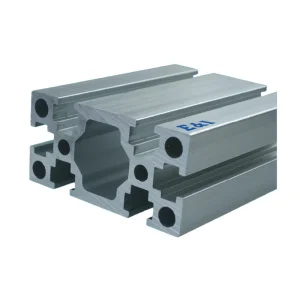
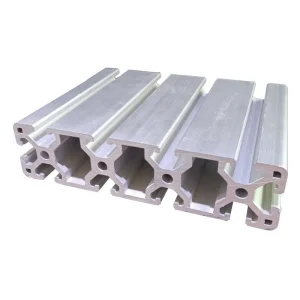
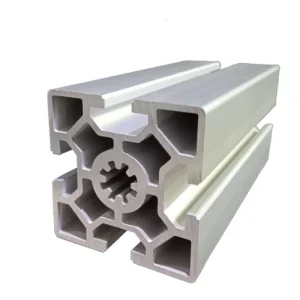
1. Automotive Assembly & Robotic Welding Cells: Heavy-duty profiles such as the ENI-8-40160 provide the rigidity required for robotic gantry tracks, structural enclosures, and tool mounts, maintaining structural stability under constant vibration.

2. Semiconductor Cleanroom Partitioning & FFU Support: With low outgassing characteristics and corrosion-resistant anodized finishes, E&I profiles support fan filter units (FFUs) and ESD-safe partition panels in Class 100 cleanrooms without introducing particulates.

3. Heavy Solar Arrays & Outdoor Support Systems: Designed to withstand wind shear and environmental exposure, our customized anodized structural rails support solar panels in utilities-scale installations.

Future Industry Trends: Green Metallurgy & Intelligent Design

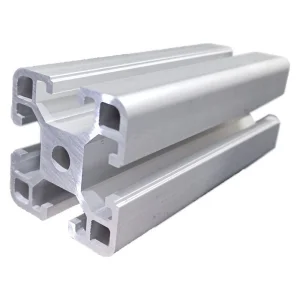
The structural aluminum sector is shifting toward sustainable manufacturing practices. E&I is investing in low-carbon smelting processes, using recycled scrap alloys to reduce greenhouse emissions per ton of extruded profile. Furthermore, the integration of T-slot designs with linear motion guides, sensor tracks, and smart wiring channels enables engineers to build machinery with integrated control systems directly within the structural framework.
Technical Q&A: Industrial Aluminum Profile Engineering

Q1: What are the primary differences in load capacity between T-slot profiles using 6063-T5 and 6061-T6 alloys?
The 6063-T5 alloy is commonly used for standard modular frames due to its excellent surface finish and complex extrusion characteristics, offering a typical yield strength of around 145 MPa. In contrast, 6061-T6 is a structural grade alloy that undergoes solution heat treatment and artificial aging, yielding a strength of roughly 240 MPa. For load-bearing frames, heavy automation gantries, or dynamic machinery supports, 6061-T6 provides higher load capacity and resistance to deformation, allowing for lighter frame assemblies under comparable stress loads.
Q2: How does anodization thickness impact the lifespan of industrial aluminum profiles in corrosive environments?
Standard anodized finishes for indoor structural frames range between 10 to 12 microns (AA10). For harsher chemical environments, coastal processing plants, or outdoor assemblies, E&I recommends an anodization layer of 15 to 25 microns (AA15 to AA25). This thicker layer increases resistance to salt spray, acidic cleanings, and mechanical wear, preventing filiform corrosion and maintaining structural integrity over decades.
Q3: What methods are used to prevent fastening failure and loosening in high-vibration applications?
High-vibration settings, such as automotive robotic cells, require targeted fastening techniques. E&I recommending using spring-loaded roll-in T-nuts, thread-locking compounds (like Loctite), and dual-anchor bolt connections. Our profile grooves are engineered with a slight inward taper on the T-slot flange; when tightened to spec, this flange flexes slightly to apply spring tension against the nut, acting as a lock washer to prevent loosening.
Q4: Can custom cross-sections be engineered for proprietary solar or mechanical applications?
Yes. E&I operates an in-house CAD/CAM tool design department. We collaborate with clients to optimize section geometry, balance moment of inertia against material weight, and produce custom dies. Standard lead times for tooling validation run from 10 to 14 days, followed by profile extrusion, surface treatment, and precision CNC cutting.
Q5: How does E&I guarantee dimensional tolerances across high-volume production batches?
Our quality control system uses coordinate measuring machines (CMM) and digital profile projectors to verify cross-sectional dimensions during extrusion runs. We adhere strictly to EN 12020-2 precision tolerances, ensuring that flatness, straightness, twist, and wall thickness remain well within acceptable engineering limits across large orders.
Q6: What packaging and moisture-prevention standards are applied to international ocean freight?
To prevent oxidation or surface staining from moisture during ocean transport, E&I profiles are individually wrapped in protective plastic film, packed with desiccants, and enclosed in heavy-duty wooden crates or steel-reinforced pallets. This packaging prevents physical shifting and exposure to humid marine environments.