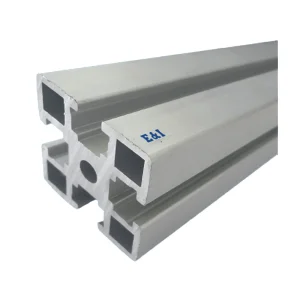
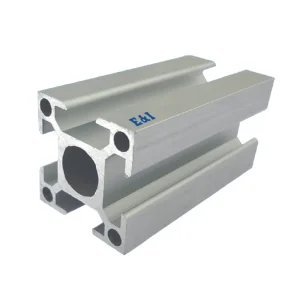
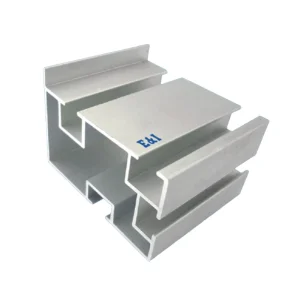
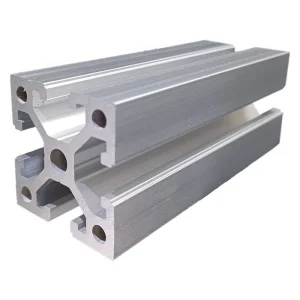
Established at the heart of China’s high-tech manufacturing corridors, Chengdu E&I Aluminum Industry Co., Ltd. stands as an industry-leading manufacturer specializing in high-difficulty, high-precision, and highly demanding aluminum alloy extrusions and assemblies. Driven by our philosophy of "people-oriented, quality value, technological innovation, and win-win cooperation," we bridge the gap between academic metallurgy research and real-world industrial implementation.
Through our direct strategic collaboration with the National Institute of Nonferrous Metals, we field a state-of-the-art light alloy R&D team. This gives our engineering staff deep domain expertise, enabling us to deliver comprehensive structural solutions, custom die configurations, and rigorous material testing. From automotive assemblies to aerospace structural jigs, we engineer structural profiles that are trusted by Fortune 500 enterprises globally.
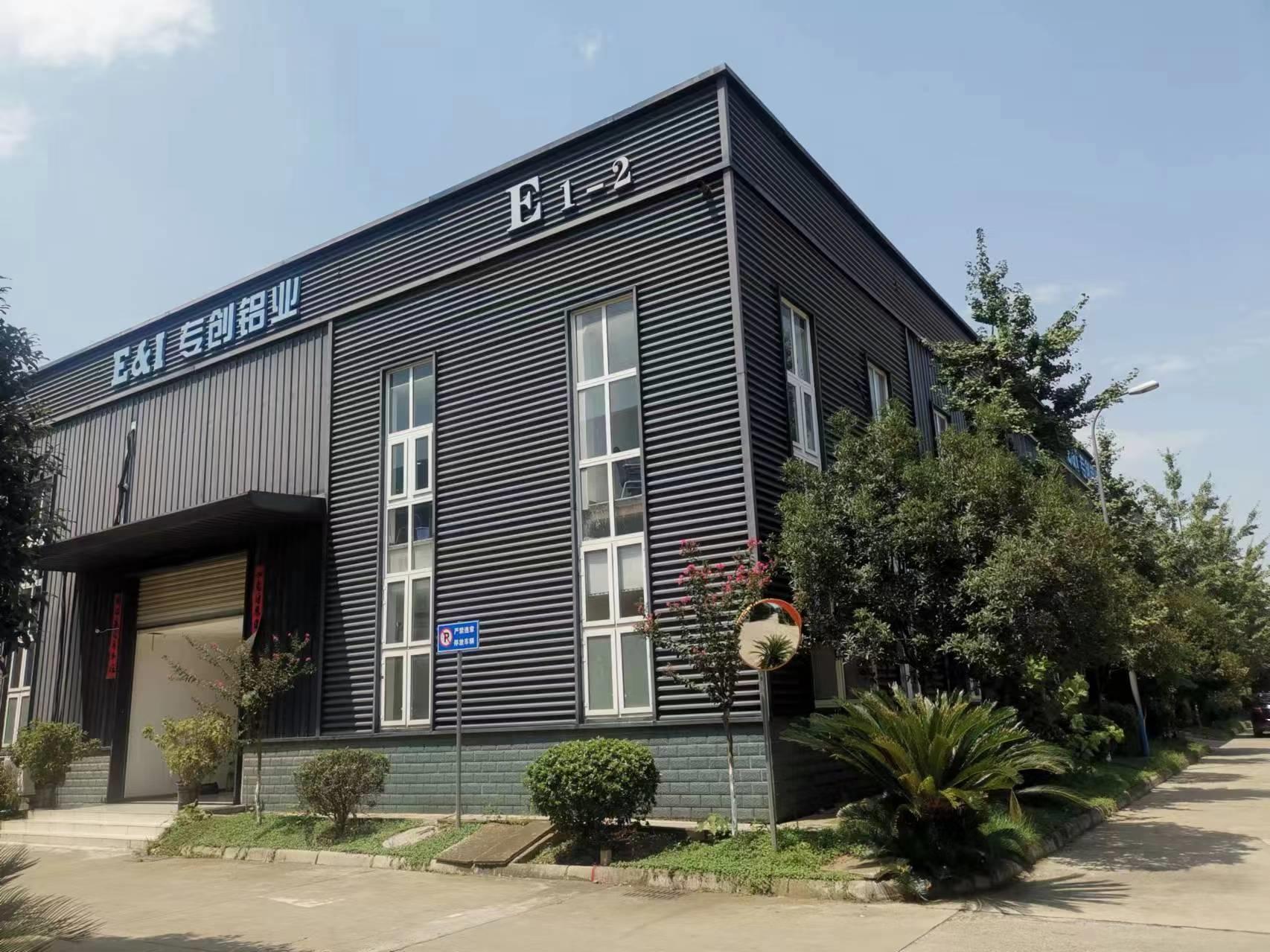
Our mandate is clear: translate advanced material science into structural certainty. By controlling the extrusion process from high-grade billets through automated anodization and post-machining, we guarantee exact mechanical properties and dimensional profiles.
Our vision is to rank among the top three Chinese enterprises in terms of alloy product competitiveness, design innovation, and technical manufacturing capability. We strive to create sustainable commercial value for our partners. By leveraging high-precision extrusions, we actively contribute to green manufacturing initiatives, reducing carbon footprint through optimized material designs and circular scrap utilization.
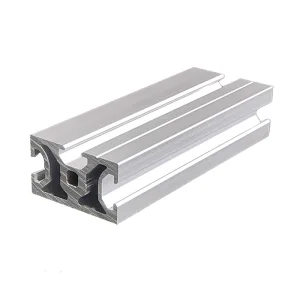
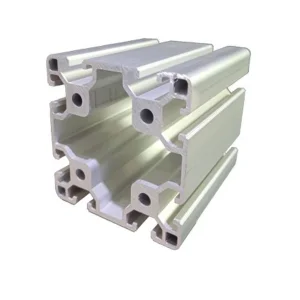
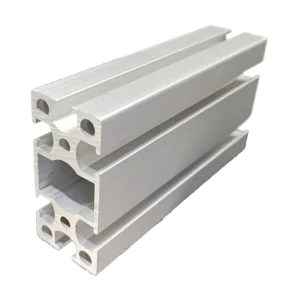
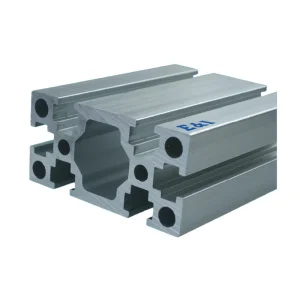
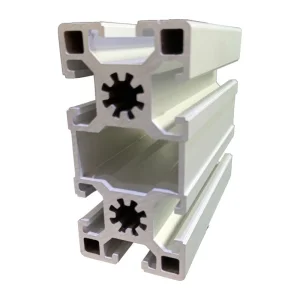
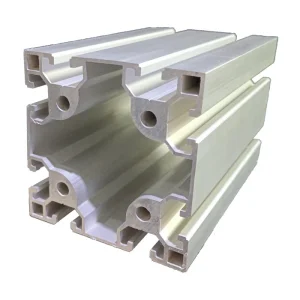
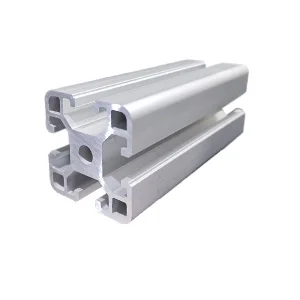
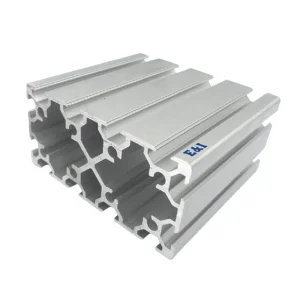
The 4080 profile geometry (40mm width by 80mm height) represents one of the most versatile form factors in structural engineering. It serves as the transition element between light-duty structures (like 4040 profiles) and ultra-heavy structural designs (such as 8080 or 9090 extrusions).
The asymmetrical design of the 40x80 profile provides highly directional strength properties. The moment of inertia along the X-axis ($I_x$) is significantly greater than along the Y-axis ($I_y$), making it the optimal choice for horizontal crossbeams subjected to vertical downward force. In configurations where bending moment resistance is critical, using a 40x80 profile instead of two 4040 profiles reduces total system mass by up to 15% while matching deflection requirements.
When calculating deflection under a concentrated load at mid-span, the mechanical engineer can rely on standard beam-deflection equations. Because of the internal structural webbing design engineered at our factory, shear stress is distributed evenly across the profile walls, preventing localized buckling under high torsional loads.
| Mechanical Parameter | Standard Value (6063-T5) | Premium Value (6061-T6) |
|---|---|---|
| Tensile Strength (MPa) | ≥ 180 | ≥ 290 |
| Yield Strength (MPa) | ≥ 130 | ≥ 240 |
| Elongation (%) | ≥ 8 | ≥ 10 |
| Vickers Hardness (HV) | ≥ 65 | ≥ 95 |
The global market for T-slot industrial aluminum profiles has shifted dramatically toward modularity and lean manufacturing. Traditionally, structural frameworks were constructed through welded steel, requiring highly paid skilled labor, post-weld grinding, sandblasting, and painting. However, the modern commercial ecosystem values fast deployment, reconfigurability, and corrosion resistance—driving the global shift to aluminum extrusions.
T-slot geometry allows rapid configuration changes without welding. Automated lines can be modified on the fly to support new machinery configurations.
Anodized coatings provide exceptional durability in harsh chemical environments, and the low density of aluminum (2.7g/cm³) facilitates easier handling.
Nearly 75% of all aluminum ever produced is still in active use. At the end of the machine's lifecycle, the profile frame maintains a high scrap recovery value.
By consolidating upstream smelting, downstream die engineering, and automated surface treatment in integrated manufacturing zones like Chengdu, China supplies high-grade 40x80 profiles at scales and cost-efficiencies unmatched globally. At Chengdu E&I, we utilize advanced raw material classification, ensuring that only certified A00 aluminum ingots enter our extrusion lines. This strict control guarantees that mechanical parameters exceed standard ASTM and EN specifications.
The Chengdu E&I 40x80 aluminum profile series is deployed across a range of heavy-industry sectors, providing structural foundations that must withstand continuous cyclic loads.
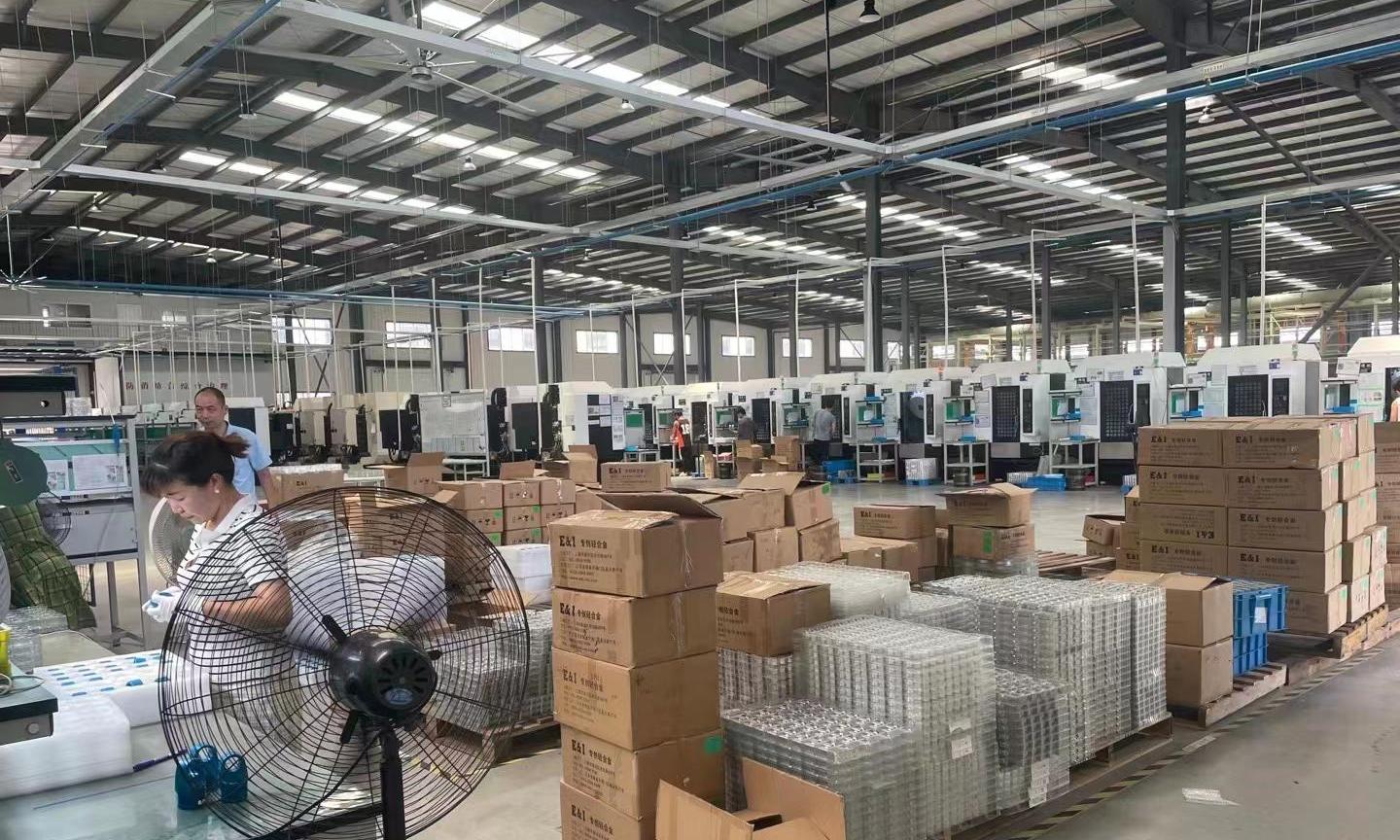
In automated pick-and-place lines, the 40x80 profile is widely used as the linear slide support. It provides the necessary stiffness to withstand dynamic forces generated by high-acceleration servo motors. The 8mm slot width perfectly matches standardized linear guide rails and mounting nuts.
Thanks to our close partnership with the National Institute of Nonferrous Metals, we manufacture custom profiles with low thermal expansion coefficients. This makes them ideal for structural jigs and calibration benches in aerospace assembly halls, where micro-level precision must be maintained.
Industrial safety relies on robust containment. The 4080 profile forms the structural columns of heavy-duty perimeter fencing, protecting operators from automated robotic cells and machining centers.
Chengdu E&I is actively developing the next generation of structural profiles. Our engineering roadmap focuses on three main pillars: material science breakthroughs, intelligent structures, and sustainable processing.
We are piloting micro-alloying techniques incorporating scandium and zirconium to achieve yield strengths exceeding 320 MPa, bridging the gap with structural carbon steels.
By co-extruding specialized channels, we can embed fiber-optic strain sensors inside the 4080 profile core. This enables real-time structural health monitoring in heavy robotic cells.
We target reducing carbon output by 40% across our extrusion plants. We achieve this by sourcing zero-emission hydropower for smelting operations and running post-consumer recycling loops.
Providing authoritative answers for mechanical designers, structural engineers, and industrial procurement managers.